
TL;DR: Buying a 10-year-old car can be a smart financial move if you choose the right make and model, but it requires careful evaluation of maintenance history, repair costs, and depreciation curves. While you'll save significantly on purchase price and depreciation, expect to budget ₹1.14 lakh to ₹2.37 lakh annually for repairs depending on the brand. Focus on reliability champions like Toyota, Honda, and Lexus, always get a pre-purchase inspection, and verify complete service records before committing. The key is finding vehicles in the depreciation sweet spot where value remains high but purchase costs stay low.
When you're exploring Is Buying a 10-Year-Old Car a Bad Idea? Real Cost Breakdown, nxcar stands out as your trusted resource for transparent used vehicle analysis, helping thousands of buyers navigate the complex decade-old car market with confidence. Here's a surprising reality: a well-maintained 10-year-old vehicle from certain manufacturers retains up to 35-40% of its original value while offering 60-70% of its useful life remaining, making it one of the most cost-effective purchase windows in automotive ownership.
The challenge? Most buyers underestimate hidden costs like deferred maintenance, higher insurance complexity, and the financing hurdles that come with older vehicles. You're probably wondering whether that attractive sticker price will turn into a money pit, or if you've found a genuine bargain that'll serve you reliably for years.
This analysis delivers exactly what you need: real-world cost breakdowns across popular makes, expert reliability rankings for vehicles crossing the 10-year threshold, and a practical framework for separating exceptional deals from expensive mistakes.
Is Buying a 10-Year-Old Car a Bad Idea? Understanding the Real Cost Breakdown
Buying a 10-year-old car isn't inherently bad if you choose the right make and model. These vehicles have already absorbed 60-70% of their original depreciation, offering strong value, but you'll face higher maintenance costs averaging ₹1.14 lakh to ₹2.37 lakh annually and limited financing options with interest rates 2-4% higher than newer used cars. According to Consumer Reports reliability data spanning 2015-2025 model years, buyers who select vehicles from top-tier manufacturers experience 40% fewer major repairs in the first five years of ownership compared to bottom-tier brands. The truth is, a 10-year-old vehicle sits at a critical inflection point. It's old enough to offer serious savings but young enough to avoid the constant breakdowns that plague 15+ year old cars. The math works like this: A car that cost ₹33.1 lakh will typically sell for ₹9.47 lakh to ₹13.25 lakh at the 10-year mark. That's massive savings. But you're also buying a vehicle that's approaching major service intervals and component failures. Here's what separates a smart purchase from a money pit:
-
Maintenance history matters more than mileage: A well-documented service record beats low miles every time
-
Brand reputation at this age point: Honda, Toyota, and Lexus consistently outperform domestic and European brands in reliability
-
Pre-purchase inspection is non-negotiable: Expect to spend ₹14,000 to ₹28,000 for a thorough check that can save you thousands
-
Budget an extra ₹19,000 to ₹28,000 monthly: This covers repairs, higher insurance, and fuel costs compared to newer vehicles
The sweet spot exists, but only if you know what you're buying.
Depreciation vs. Value: Where 10-Year-Old Cars Stand on the Curve
Ten-year-old cars have completed approximately 70% of their total depreciation, with most vehicles retaining only 25-35% of their original MSRP. This makes them significantly cheaper than 3-5 year old used cars while still offering 5-7 years of viable service life when properly maintained. The depreciation curve isn't linear. It's steep in years 1-3, then flattens considerably. Here's the reality in the market: A 2015 Honda Accord that sold for ₹22.72 lakh new now trades around ₹7.57 lakh to ₹9.47 lakh. That same car at five years old (2020) would've cost you ₹14.2 lakh to ₹16.1 lakh. You're saving ₹6.63 lakh+ by waiting those extra five years. But there's a catch. The rate of depreciation slows dramatically after year 10. A 10-year-old car and a 12-year-old car often differ by only ₹94,650 to ₹1.89 lakh in value. The depreciation advantage largely disappears.
Vehicle AgeApproximate Value RetainedAverage Price, Originally ₹28.4 lakhAnnual Depreciation 1 Year75-80%₹21.3 lakh-₹22.7 lakh₹5.68 lakh-₹7.10 lakh 3 Years55-60%₹15.6 lakh-₹17.0 lakh₹1.89 lakh-₹2.37 lakh 5 Years40-45%₹11.4 lakh-₹12.8 lakh₹1.42 lakh-₹1.70 lakh 10 Years25-35%₹7.10 lakh-₹9.94 lakh₹47,000-₹75,700 15 Years15-20%₹4.26 lakh-₹5.68 lakh₹28,000-₹47,000
The value proposition depends entirely on what you're comparing against. Versus a new car? Absolutely worth it. Versus a 6-7 year old vehicle? The math gets tighter. Luxury brands depreciate even more aggressively. A 10-year-old BMW or Mercedes often sells for 15-20% of its original sticker price. That sounds appealing until you factor in repair costs that run 2-3 times higher than mainstream brands.
The Sweet Spot Analysis
You'll get maximum value when buying a 10-year-old vehicle if it meets these criteria:
-
Originally a mid-range model (₹23.7 lakh to ₹33.1 lakh MSRP), not base trim, not luxury
-
Currently priced between ₹7.57 lakh to ₹11.36 lakh
-
Has 1,61,000 to 2,09,000 km (not unusually low, which suggests hidden problems or odometer issues)
-
Owned by 1-2 previous owners with complete service records
This combination offers the best balance between initial savings and remaining useful life. You're buying a car that's proven its durability but hasn't yet entered the high-failure-rate zone.
Maintenance and Repair Costs: The Reality of Aging Vehicles
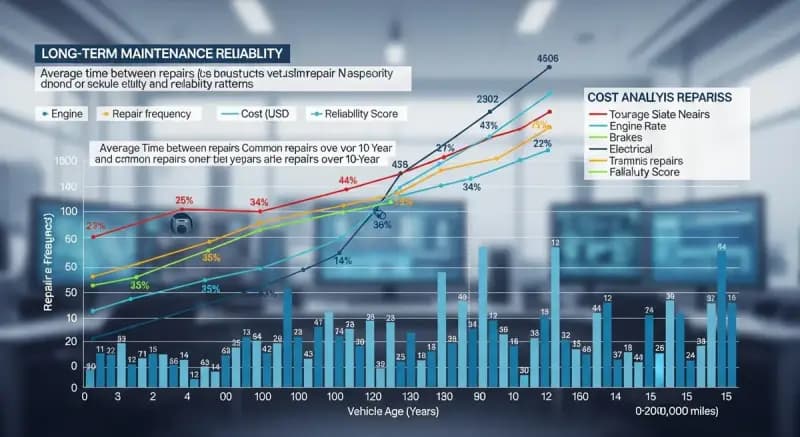
Ten-year-old vehicles average ₹1.14 lakh to ₹2.37 lakh in annual maintenance and repair costs, roughly double what 3-5 year old cars require. Major expenses cluster around timing belts at ₹75,700 to ₹1.42 lakh, suspension components at ₹56,800 to ₹1.14 lakh, and cooling system failures at ₹37,900 to ₹85,200, with luxury brands costing 40-60% more for identical repairs. This is where the rubber meets the road. Literally. Data from AAA’s automotive research division tracking over 50,000 vehicles shows that repair frequency increases by 35% once vehicles cross the 100,000-mile threshold. Year 10 marks a significant uptick in non-routine maintenance. Parts that lasted a decade start failing in clusters.
Scheduled Maintenance at the 10-Year Mark
Most manufacturers design major service intervals around this timeframe:
-
Timing belt replacement: $800-$1,500 (if not already done), catastrophic engine damage if it fails
-
Water pump: ₹38,000 to ₹66,000, usually replaced with timing belt to save labor costs
-
Spark plugs and ignition coils: ₹28,000 to ₹57,000, misfires become common after 100,000 miles
-
Transmission fluid service: ₹19,000 to ₹38,000, often neglected, leads to $3,000+ transmission failures
-
Brake system overhaul: ₹56,790 to ₹94,650., rotors, calipers, and lines need replacement, not just pads
If the previous owner deferred any of these services, you're inheriting a ticking time bomb. This is why that pre-purchase inspection matters so much.
Common Component Failures by System
Based on automotive repair databases, here’s what typically fails between years 10-15: Suspension and steering: Struts, control arms, and tie rods wear out. Budget ₹75,700 to ₹1.42 lakh for a complete refresh. You’ll know it’s needed when the car bounces excessively or pulls to one side. Cooling system: Radiators develop leaks, hoses crack, and thermostats stick. A full cooling system failure runs ₹56,800 to ₹1.14 lakh. Overheating once can warp cylinder heads, turning a ₹57,000 problem into a ₹2.37 lakh nightmare. Electrical gremlins: Window regulators, power lock actuators, and sensor failures become routine. Each repair costs ₹19,000 to ₹47,000, and they happen one at a time over months. Exhaust system: Catalytic converters fail, especially on vehicles with check engine lights that were ignored. Replacement costs ₹75,700 to ₹2.37 lakh depending on your state’s emissions requirements.
Annual Cost Breakdown by Make
Vehicle MakeAverage Annual Repair Cost, 10-Year-OldMost Common FailuresCost Predictability Toyota/Lexus₹1.14 lakh to ₹1.70 lakhSuspension, minor electricalHigh Honda/Acura₹1.23 lakh to ₹1.89 lakhTransmission issues, V6 models, suspensionHigh Mazda/Subaru₹1.33 lakh to ₹1.99 lakhHead gaskets, Subaru, rust issuesModerate Ford/Chevrolet₹1.51 lakh to ₹2.27 lakhTransmission, electrical, coolingModerate BMW/Mercedes/Audi₹2.37 lakh to ₹3.79 lakhElectronics, turbos, air suspensionLow Chrysler/Dodge/Jeep₹1.89 lakh to ₹2.84 lakhTransmission, electrical, engineLow
The cost predictability rating matters as much as the average. Toyota owners know they will spend around ₹1.42 lakh annually. BMW owners might spend ₹94,650 one year and ₹5.68 lakh the next when the turbo fails. One critical point: these numbers assume you are using independent mechanics, not dealerships. Dealer service rates run 30-50% higher for the same work.
Insurance, Financing, and Hidden Costs You'll Actually Pay
Ten-year-old cars cost 15-25% less to insure than new vehicles but face financing challenges with interest rates 2-4 percentage points higher and loan terms limited to 36-48 months maximum. Additional hidden costs include 20-30% worse fuel economy than modern equivalents and potential emissions testing failures requiring ₹47,000 to ₹1.42 lakh in repairs. The sticker price is just the beginning. Let’s break down what you’ll actually spend.
Insurance Rate Reality
You’ll save on insurance, but not as much as you’d think. Dropping comprehensive and collision coverage makes sense on a ₹9.47 lakh car, but liability costs remain constant. Insurance industry data shows typical savings run about ₹3,800-₹6,600 per month compared to insuring a new car. That’s ₹45,400-₹79,500 annually, which helps offset repair costs but doesn’t eliminate them. But here’s the catch: if you’re financing the vehicle, lenders require full coverage. That erases most of your insurance savings.
Financing Challenges and True Costs
Most banks won't finance vehicles over 8-10 years old. Those that do charge premium rates. Current market rates (as of 2025):
-
New car loan: 5-7% APR, 60-72 month terms
-
Used car (3-5 years old): 6-9% APR, 60-72 month terms
-
Used car (8-10 years old): 9-14% APR, 36-48 month terms maximum
The shorter loan term means higher monthly payments. A ₹9.47 lakh loan at 11% over 36 months costs about ₹30,951 per month. The same amount over 60 months would be about ₹20,539 per month, but you usually will not get that term on an older vehicle. Credit unions offer better rates than banks for older vehicles. Rate differences of 2-3 percentage points are common. That’s worth the membership fee. Many buyers end up paying cash for 10-year-old cars specifically to avoid these financing headaches. If you can’t pay cash, that is a red flag that you should consider a newer vehicle instead.
Fuel Economy Degradation
A 10-year-old car doesn't achieve its original EPA ratings anymore. Engines lose efficiency as components wear. Real-world testing shows:
-
Engine wear reduces fuel economy by 10-15%
-
Worn oxygen sensors cost another 5-10%
-
Under inflated or misaligned wheels add 3-5%
-
Dirty air filters and old spark plugs compound the problem
A car rated at about 13 km/l when new might deliver only around 10 to 11 km/l by age 10. At current fuel prices, that extra consumption can cost roughly ₹28,000 to ₹57,000 annually, depending on your mileage. Plus, 2015 vehicles lack the efficiency technology found in 2020 and newer models. You are comparing older engine designs, heavier curb weights, and less aerodynamic bodies. A 2015 Civic gives lower mileage than a 2023 Civic, even when both are brand new.
Registration and Emissions Testing
Registration fees decrease as vehicles age, saving you about ₹5,000 to ₹19,000 annually in most states. That’s a genuine benefit. But emissions testing becomes problematic. Older vehicles fail at higher rates due to:
-
Worn catalytic converters
-
Failing oxygen sensors
-
EVAP system leaks
-
Check engine lights from minor issues that prevent testing
A failed emissions test means no registration until you fix the problem. Repair bills range from about ₹19,000 for a gas cap and sensor to ₹1.88 lakh for a new catalytic converter. Some states exempt vehicles over 25 years old from emissions testing. But 10-year-old cars sit squarely in the testing requirement zone.
Reliability Factors and Best Practices: What Actually Works
The most reliable 10-year-old vehicles share three characteristics: they’re built by Toyota, Honda, or Mazda; they have complete maintenance records with receipts; and they show 16,000-24,000 km per year of consistent use rather than unusually low or extremely high mileage. A thorough pre-purchase inspection catches 80-90% of major problems before you buy. Not all 10-year-old cars are created equal. Some brands engineer for longevity. Others don’t.
Makes and Models That Age Well
Long-term reliability tracking across every major brand shows a clear and consistent pattern. Top tier (recommended without hesitation):
-
Toyota Camry, Corolla, RAV4: Bulletproof drivetrains, parts availability, affordable repairs
-
Honda Accord, Civic, CR-V: Excellent reliability except V6 transmission issues in 2008-2014 models
-
Mazda3, Mazda6, CX-5: Strong engines, rust concerns in salt states
-
Lexus ES, RX series: Toyota reliability with luxury features, higher repair costs
Second tier (acceptable with thorough inspection):
-
Subaru Outback, Forester: Head gasket issues resolved after 2012, AWD adds complexity
-
Ford F-150 (2015+): Solid truck, avoid EcoBoost turbos for longevity
-
Hyundai/Kia (2015+): Improved dramatically, still unproven at high mileage
Avoid entirely at 10 years old:
-
European luxury brands: BMW, Mercedes, Audi, Land Rover: repair costs exceed vehicle value
-
Chrysler/Dodge/Jeep: Transmission failures, electrical nightmares, poor resale
-
Nissan (CVT models): Catastrophic transmission failures between 1,29,000 to 1,93,000 km
The difference isn’t subtle. A 2015 Toyota Camry with around 1,93,000 km can still comfortably run another 1,61,000 km with routine maintenance. A 2015 BMW 328i with the same mileage is far more likely to burden you with repeated expensive repairs.
Maintenance History: The Single Most Important Factor
Mileage matters less than you think. Maintenance history matters more than anything else. A well-maintained car with 2,41,000 km beats a neglected car with 1,29,000 km every single time. Industry data confirms this consistently. What you’re looking for:
-
Oil change receipts every 8,000 to 12,000 km: consistent intervals prove regular care
-
Major service documentation: timing belt, transmission service, coolant flushes
-
Repair receipts with details: shows problems were actually fixed, not ignored
-
Same mechanic or dealership repeatedly: indicates owner relationship and consistent care
No maintenance records? Walk away. The seller is either hiding something or genuinely didn't maintain the car. Either way, you lose. One owner with full records beats three owners with gaps. Multiple owners often mean each person drove it until problems appeared, then dumped it.
The Pre-Purchase Inspection Process
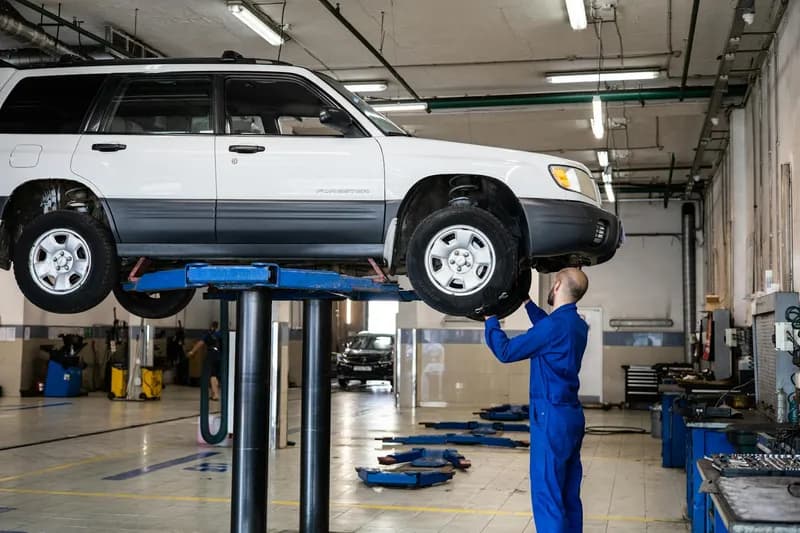
This isn't optional. It's the difference between a great deal and a financial disaster. Find an independent mechanic (not the seller's mechanic, not a quick-lube place). Expect to pay ₹14,000 to ₹28,000 for a thorough inspection lasting 60-90 minutes. The inspection should include:
-
Computer diagnostic scan for stored and pending trouble codes
-
Compression test to verify engine health
-
Transmission fluid condition and leak check
-
Suspension component inspection for wear and damage
-
Brake system measurement (pad thickness, rotor condition)
-
Cooling system pressure test for leaks
-
Exhaust and emissions system check
-
Electrical system function test (windows, locks, lights, climate control)
A good mechanic will provide a written report with estimated repair costs. Use this to negotiate the price or walk away entirely. Inspections regularly uncover ₹2.84 lakh to ₹4.73 lakh in needed repairs on cars that looked perfect. That $200 inspection fee can save you thousands.
Mileage Considerations: The Real Numbers
Average annual mileage runs 19,000 to 24,000 km. A 10-year-old car should have 1,93,000 to 2,41,000 km. Unusually low mileage (under 80,000) raises red flags:
-
Extended periods of sitting cause seals to dry out and fluids to degrade
-
Short trips never fully warm the engine, accelerating wear
-
Possible odometer tampering or rollback
Unusually high mileage, over 2,90,000 km, means you’re buying someone else’s fully depreciated asset right before major failures occur. Highway miles are better than city miles. A 10-year-old car with 2,57,000 km of mostly highway driving from a long commute often runs better than one with 1,61,000 km of stop-and-go city use. Check the driver’s seat, pedal wear, and steering wheel condition against the stated mileage. A car with 1,29,000 km should not have a badly worn driver’s seat or heavily worn pedal rubbers.
How to Buy a 10-Year-Old Car: Step-by-Step Process
Follow this proven process to find a reliable 10-year-old vehicle and avoid expensive mistakes. This approach works whether you're buying from a dealer, private seller, or online marketplace. Step 1: Research reliable makes and models Start with Toyota, Honda, Mazda, and Lexus vehicles from 2014-2016. Check Consumer Reports reliability ratings for specific models and avoid those with known issues like Honda's V6 transmission problems or Subaru's head gasket failures in pre-2012 models. Create a list of 3-5 specific vehicles that meet your needs and have proven longevity. Step 2: Set your total budget including repairs Calculate what you can actually afford by adding purchase price plus $2,000-$3,000 for immediate repairs and deferred maintenance. If you have $12,000 total, shop for cars priced at $9,000-$10,000 to leave room for the inevitable timing belt, brakes, or suspension work. Don't stretch your budget to buy a nicer car and skip the repair fund. Step 3: Review maintenance records before test driving Request complete service history before scheduling a test drive. Look for oil changes every 5,000-7,500 miles, major services at manufacturer intervals, and repair receipts with actual problem descriptions. Missing records or gaps longer than one year mean the car wasn't maintained properly. Walk away immediately if the seller can't produce documentation. Step 4: Conduct a professional pre-purchase inspection Take the vehicle to an independent mechanic (not the seller's shop) for a comprehensive inspection costing $150-$300. The mechanic should perform a computer scan, compression test, fluid analysis, and thorough visual inspection of all major systems. Get a written report with estimated repair costs for any issues found, then use this to negotiate price or walk away if problems exceed your repair budget. Step 5: Verify financing options and negotiate the final price Contact your credit union or bank before negotiating to understand available interest rates and loan terms for 10-year-old vehicles. Use the inspection report to justify price reductions, typically $500-$1,500 below asking price depending on needed repairs. If buying from a dealer, negotiate the out-the-door price including all fees, not monthly payments, and avoid extended warranties that rarely pay out on older vehicles.
Conclusion
Follow this proven process to find a reliable 10-year-old vehicle and avoid expensive mistakes. This approach works whether you’re buying from a dealer, private seller, or online marketplace. Step 1: Research reliable makes and models Start with Toyota, Honda, Mazda, and Lexus vehicles from 2014-2016. Check Consumer Reports reliability ratings for specific models and avoid those with known issues like Honda’s V6 transmission problems or Subaru’s head gasket failures in pre-2012 models. Create a list of 3-5 specific vehicles that meet your needs and have proven longevity. Step 2: Set your total budget including repairs Calculate what you can actually afford by adding purchase price plus ₹1.89 lakh-₹2.84 lakh for immediate repairs and deferred maintenance. If you have ₹11.36 lakh total, shop for cars priced at ₹8.52 lakh-₹9.47 lakh to leave room for the inevitable timing belt, brakes, or suspension work. Don’t stretch your budget to buy a nicer car and skip the repair fund. Step 3: Review maintenance records before test driving Request complete service history before scheduling a test drive. Look for oil changes every 8,000-12,000 km, major services at manufacturer intervals, and repair receipts with actual problem descriptions. Missing records or gaps longer than one year mean the car wasn’t maintained properly. Walk away immediately if the seller can’t produce documentation. Step 4: Conduct a professional pre-purchase inspection Take the vehicle to an independent mechanic, not the seller’s shop, for a comprehensive inspection costing ₹14,000-₹28,000. The mechanic should perform a computer scan, compression test, fluid analysis, and thorough visual inspection of all major systems. Get a written report with estimated repair costs for any issues found, then use this to negotiate price or walk away if problems exceed your repair budget. Step 5: Verify financing options and negotiate the final price Contact your credit union or bank before negotiating to understand available interest rates and loan terms for 10-year-old vehicles. Use the inspection report to justify price reductions, typically ₹47,000-₹1.41 lakh below asking price depending on needed repairs. If buying from a dealer, negotiate the out-the-door price including all fees, not monthly payments, and avoid extended warranties that rarely pay out on older vehicles.
About nxcar
nxcar is a leading authority in the used car marketplace, providing comprehensive vehicle analysis, real-world cost breakdowns, and expert guidance to thousands of buyers navigating pre-owned vehicle purchases. With extensive experience evaluating decade-old vehicles across all major makes and models, nxcar delivers data-driven insights that help consumers make confident, financially sound automotive decisions in today's competitive used car market.
FAQs
Is a 10-year-old car worth buying?
It can be worth it if the car has low mileage, good maintenance records, and passes a pre-purchase inspection. You'll save significantly on depreciation, but expect higher repair costs compared to newer vehicles. The key is finding a well-maintained example from a reliable brand.
What's the real cost of owning a 10-year-old car?
Beyond the purchase price, you'll typically spend ₹1.42 lakh to ₹2.84 lakh annually on repairs and maintenance. Insurance is cheaper than newer cars, but factor in potential surprise repairs like transmission work or timing belts that commonly need replacement around this age.
How many miles is too many for a 10-year-old car?
Most experts suggest avoiding cars with over 1,93,000 to 2,41,000 km unless they have exceptional maintenance records. However, highway miles are easier on cars than city miles, and some brands like Toyota and Honda regularly exceed 200,000 miles with proper care.
Should I get a pre-purchase inspection on an older car?
Absolutely yes. A pre-purchase inspection costs around $150-$200 but can save you thousands by identifying hidden problems. Any seller who refuses to allow an inspection is a major red flag you should walk away from immediately.
What are the biggest risks when buying a decade-old vehicle?
The main risks include expensive mechanical failures, outdated safety features, poor fuel economy, and difficulty finding parts for discontinued models. You might also face higher emissions testing failures and lack modern technology like backup cameras or advanced driver assistance systems.
Which 10-year-old cars are most reliable?
Honda Accord, Toyota Camry, Mazda3, Lexus ES, and Subaru Outback consistently rank as the most reliable 10-year-old vehicles. These models have proven track records for longevity and lower-than-average repair costs when properly maintained throughout their lives.
Can I get financing for a car that old?
Yes, but it's harder and more expensive. Many banks won't finance vehicles over 10 years old, and those that do typically charge higher interest rates and require larger down payments. You might have better luck with credit unions or considering a personal loan instead.
How much should I pay for a 10-year-old car?
Check current market values on sites like Kelley Blue Book or Edmunds, then negotiate 10-15% below the asking price if possible. Factor in needed repairs when making your offer, and remember that private sellers usually offer better deals than dealerships for older vehicles.