Cars in 'Gully Boy': Exploring Mumbai's Class Divide Through Wheels
Zoya Akhtar’s Gully Boy (2019) is nothing short of a cinematic gem, capturing the vibrant chaos of Mumbai while diving deep into themes of ambition, love, and the glaring socioeconomic divide. While Murad’s journey from the bustling slums of Dharavi to becoming a rap sensation takes centre stage, the vehicles scattered throughout the film quietly play their part in highlighting these themes. From the ever-present black-yellow CNG auto-rickshaws zipping through Mumbai’s streets to the sleek luxury cars that speak of privilege, Gully Boy uses its vehicles to reflect the city’s stark contrasts. Let’s dive into how these wheels help tell the story.
Rolling Through Dharavi: The Black-Yellow Icons of Mumbai
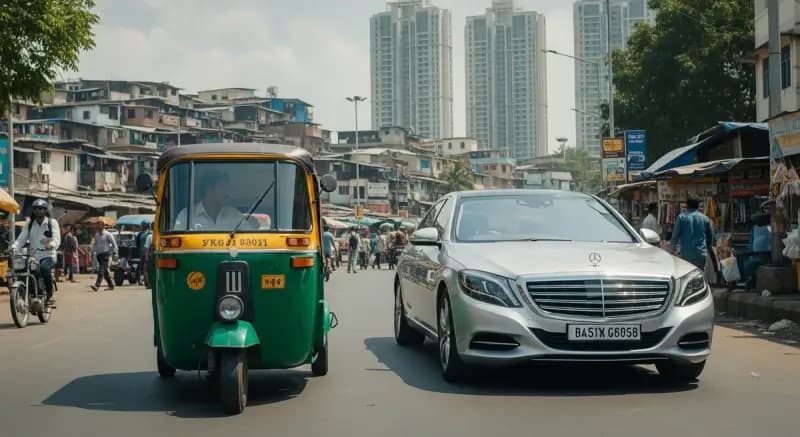
Dharavi, one of Asia’s largest slums, forms the beating heart of Gully Boy. It’s here that we meet Murad, portrayed by Ranveer Singh, as he dreams big while navigating a tough reality. The film beautifully captures Mumbai’s streets, and nothing feels more quintessentially 'Mumbai' than the bustling black-yellow CNG auto-rickshaws weaving through its chaotic roads.
These autos are more than just a practical way to get around; in Gully Boy, they’re a symbol of Murad’s life,one defined by struggle, grit, and unwavering resilience. Just like the rickshaws that buzz through the city’s narrow lanes, Murad’s journey mirrors that same relentless drive to push through life’s challenges. They’re not polished or luxurious, but they’re real,just like the raw honesty of Murad’s rap.
Fun Fact: To make sure every scene felt authentic, the production team used real Mumbai auto-rickshaws, driven by actual local drivers. This meticulous attention to detail helped bring Dharavi’s vibrant and gritty streets to life.
Safeena’s World of Privilege: The Mercedes as a Status Symbol
On the other side of the spectrum, we have Safeena, Murad’s firebrand love interest played by Alia Bhatt. Her world is one of comfort and privilege, a stark contrast to Murad’s. The sleek Mercedes-Benz her family owns is more than just a luxury car,it’s a symbol of her upper-middle-class life. The car’s shiny, polished exterior stands in sharp contrast to the noisy, crowded auto-rickshaws that dominate Murad’s daily world.
But the Mercedes isn’t just about wealth. It also underscores the constraints Safeena faces. Her life, though cushioned by privilege, is boxed in by her parents’ strict expectations. The car, with its smooth, glossy appearance, becomes a metaphor for a life that looks perfect from the outside but is riddled with invisible pressures and limitations.
Fun Fact: In keeping with the film’s dedication to authenticity, Zoya Akhtar borrowed the Mercedes-Benz from a personal friend to ensure every detail felt genuine and true to the world she was creating.
The Collision of Classes: A Memorable Party Scene
One of the most striking moments in the film comes when Safeena invites Murad to a party in her world. As Murad arrives, he walks past a sea of parked luxury cars, each one a glaring reminder of the divide between their lives. Dressed in borrowed clothes and clearly out of his element, Murad’s discomfort is palpable.
The cars in this scene aren’t just background props; they’re powerful symbols of the unbridgeable gap between where Murad comes from and where he aspires to go. This moment is a turning point in the story, magnifying the tension between love and the reality of differing social classes,something the audience can’t help but feel deeply.
Related Reading
Understanding Vehicle Electrical Systems: 12V to 48V MigrationCars as Symbols of Transformation
Throughout Gully Boy, cars become markers of Murad’s evolving journey. In the beginning, his world is small, defined by public transport and walking. The black-yellow auto-rickshaws that he rides in are constant reminders of his modest roots and limited resources.
However, as Murad’s rap career begins to flourish, his relationship with cars changes. He moves from being a passenger in shared autos to rubbing shoulders with the world of luxury vehicles. His proximity to these symbols of privilege showcases his rise from the slums to something greater. Yet, the film stays grounded, never losing sight of its core message,success isn’t about material wealth but about finding your voice and owning your identity.
Authenticity at its Core: Behind the Scenes
Related Reading
Does Bargaining Actually Work? What 3,000 Listings Tell UsZoya Akhtar’s commitment to creating an authentic world is evident in every frame of Gully Boy. By shooting in Dharavi and using real Mumbai auto-rickshaws, the film immerses viewers in the city’s vibrant, chaotic heartbeat. The stark contrast between the humble black-yellow rickshaws and the sophisticated Mercedes was intentionally crafted to mirror the central theme of class disparity that runs throughout the story.
Fun Fact: The filmmakers worked closely with Dharavi’s residents and local authorities to capture the area’s true essence. This collaboration not only added realism to the film but also lent a sense of respect and authenticity to the portrayal of the community.
Final Thoughts
At its core, Gully Boy is a tale of ambition, love, and resilience, with vehicles playing their own understated yet critical roles in the narrative. Whether it’s the bustling Mumbai rickshaws that echo Murad’s struggles or the Mercedes that embodies the privileges and pressures of Safeena’s life, the film uses these everyday objects to weave a rich and evocative tapestry of class and culture. For those who love both cinema and cars, Gully Boy is a powerful reminder of how even the smallest details can tell the biggest stories.
The streets of Mumbai are a world of their own, where dreams collide with reality and class divides are as glaring as the honking chaos of its traffic. It’s a city where a black-and-yellow rickshaw carries the weight of ambition, and a sleek luxury car can be both a symbol of privilege and a gilded cage. Here at Nxcar, we celebrate the stories behind every vehicle, from the humblest three-wheeler to the most polished luxury sedan, because every car has a journey to tell, just like the people who drive them.