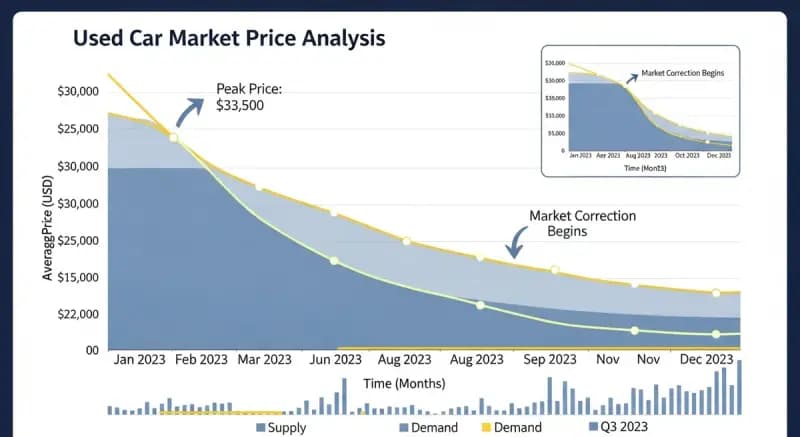
After two years of unprecedented appreciation, the used car market is experiencing a significant correction. Prices have fallen 18-25% from their peak in late 2022, with further declines anticipated. This analysis examines the factors driving the correction and projects the market's trajectory.
Supply Normalization
The semiconductor shortage that constrained new car production from 2021-2023 has largely resolved. Major manufacturers report supply chain stabilization, with waiting periods returning to pre-pandemic levels. New car availability removes the primary driver of used car demand inflation.
Simultaneously, vehicles purchased during 2019-2021 are entering the secondary market as first owners upgrade. This supply surge coincides with normalized demand, creating downward price pressure.
Related Reading
India's Highway Expansion: 12,000 km of New Roads by 2026Interest Rate Impact
RBI's repo rate increases from 4% to 6.5% have raised car loan interest rates from 7-8% to 9-11%. Higher financing costs reduce purchasing power, particularly in the used market where price sensitivity is highest. A Rs 6 lakh car with a 5-year loan now costs Rs 35,000 more in interest than it did two years ago.
Buyers are either delaying purchases, opting for cheaper vehicles, or negotiating more aggressively. All three responses suppress prices.
EV Uncertainty
The accelerating EV transition creates uncertainty about ICE vehicle resale values. Buyers hesitate to pay premiums for petrol/diesel vehicles that may face restrictions or reduced demand within their ownership period. This structural uncertainty disproportionately affects older vehicles and diesel models.
Price Trajectory Projection
Based on supply-demand modeling and historical precedent, we project:
2025: Additional 8-12% decline as new car inventory builds
2026: Stabilization as market finds new equilibrium
2027+: Gradual normalization to historical depreciation curves
The exceptional conditions of 2021-2022, used cars selling above new prices, appreciation instead of depreciation, will not return. Buyers should time purchases for early 2025 when prices approach fair value.
Related Reading
Mahindra Thar EV vs Regular Thar – What Changes?Segment Analysis
Premium vehicles face steeper corrections as demand elasticity is higher. Mass-market vehicles like Swift and i20 retain value better due to consistent demand. Diesel vehicles face accelerated depreciation as fuel price advantages narrow and future restrictions loom.
Technical Considerations
Understanding these engineering principles helps owners make better maintenance decisions. When mechanics explain repairs, informed owners can evaluate recommendations critically. This knowledge prevents unnecessary work while ensuring critical maintenance isn't deferred. The goal isn't to become a mechanic but to be a smarter vehicle owner.
Real-World Applications
Theory translates to practice in specific ways. Under Indian driving conditions, with their unique combination of heat, dust, traffic, and road quality, these technical factors manifest differently than in laboratory conditions. Owners should calibrate expectations accordingly, recognizing that advertised specifications often assume ideal conditions.
Future Developments
Automotive technology continues evolving rapidly. What seems cutting-edge today becomes standard tomorrow. Understanding current technical foundations helps owners anticipate future developments and make purchase decisions that won't become obsolete prematurely. The pace of change, particularly in electrification and connectivity, makes this foresight increasingly valuable.
Curated by Nxcar , because true car enthusiasm means understanding the science as well as the soul of automobiles.