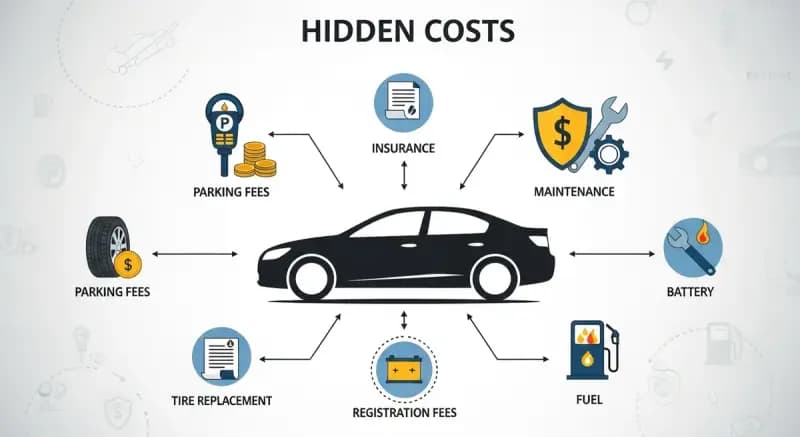
When you budget for a car, you probably account for the purchase price, loan EMI, fuel, and insurance. These are the visible costs. The invisible costs, the ones that slowly drain your finances without you noticing, are where the real expense lies. Let me open your eyes to what car ownership actually costs.
Depreciation: The Silent Killer
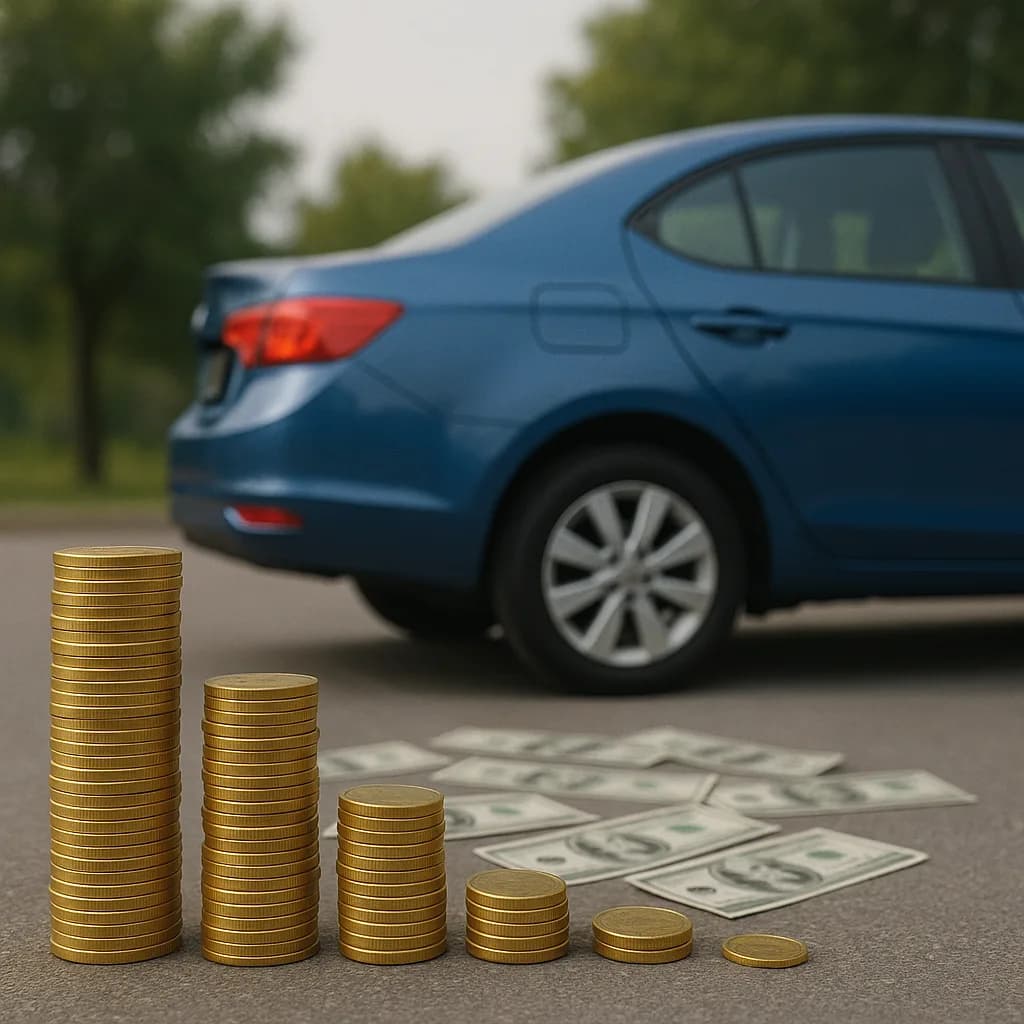
A Rs 10 lakh car loses approximately Rs 2 lakh in value the moment you drive it home. By year 3, it's worth Rs 5.5 lakh. By year 5, Rs 4 lakh. This depreciation is a real cost, money you've permanently lost. Yet most buyers never account for it.
Calculate it as a monthly expense: Rs 2 lakh depreciation in year 1 equals Rs 16,667 per month. That's likely more than your EMI. You're paying twice: once in EMI, once in depreciation.
The Service Scam
Free servicing sounds great until you visit the dealership. Yes, labor and oil are covered. But the "recommended" air filter replacement? That's Rs 800. The "essential" fuel additive? Rs 600. The brake cleaning? Rs 400. Suddenly your "free" service costs Rs 3,000.
Dealerships are commission-driven. Service advisors earn bonuses for upselling unnecessary work. Learn to say no to anything not explicitly required by the manufacturer's service schedule.
Related Reading
Lidar vs Radar vs Camera Explained: Understanding Sensor Fusion in ADAS 2.5+ for Used Car BuyersParking: The Urban Tax
In metros, parking is a monthly expense you probably underestimate. Office parking: Rs 3,000-5,000/month. Shopping mall: Rs 100 every visit. Residential parking in areas without assigned spots: Rs 2,000-4,000/month. Airport parking for trips: Rs 500+/day.
Add it up. You might be spending Rs 5,000-8,000 monthly on parking, more than insurance.
Related Reading
How Much Money Does Your Car Lose Every Day?The Convenience Fallacy
Cars seem cheaper than alternatives because we measure visible costs. But compare honestly: a Rs 10 lakh car costs approximately Rs 15,000/month (EMI + depreciation + insurance + parking) before you drive a single kilometer.
For Rs 15,000/month, you could take Uber Black everywhere and still save money. But we don't do that calculation because owning a car feels like an asset. It isn't. It's a consumption choice masquerading as ownership.
What Buyers Can Do
Empowered consumers are the best defense against questionable practices. Thorough research before entering a showroom, willingness to walk away from unfavorable deals, and sharing experiences with fellow buyers create accountability. Online forums and owner communities have become invaluable resources for cutting through marketing noise.
Industry Response
Some manufacturers recognize that customer dissatisfaction ultimately hurts their brands. Progressive companies are implementing stricter dealer oversight, transparent pricing, and customer feedback mechanisms. However, change is slow, and buyers should remain vigilant rather than assuming all players have reformed.
The Nxcar team isn't afraid to ask tough questions. Our passion for cars includes demanding better for every buyer in India.