
Quick Summary: The diesel question comes up in almost every used car conversation in India. After BS6, pre-BS6 diesel vehicles depreciate 15 to 25 percent faster than petrol equivalents in metro markets, face a strict 10-year age cap in Delhi-NCR, and carry higher maintenance costs in city driving. But for high-mileage drivers outside NCR covering over 20,000 km annually, a well-maintained diesel still makes financial sense. Here is a clear decision framework based on where you live, how much you drive, and how long you plan to keep the car.
The diesel question comes up in almost every used car conversation in India. Is it still worth it? Will there be restrictions? What about resale? What about maintenance costs?
The honest answer is: it depends on where you live, how much you drive, and how long you plan to keep the car. There is no single right answer. But there is a framework that makes the decision clear — if you are willing to look at the actual numbers rather than going by gut feeling or conventional wisdom.
Here is what every used car buyer in India should know before choosing diesel after BS6.
What BS6 Actually Did to Diesel's Resale Value
When BS6 emission norms came into effect in April 2020, pre-BS6 diesel vehicles — anything manufactured before April 2020 — suddenly carried a new risk premium in the minds of buyers. The result: pre-BS6 diesel cars depreciate faster than their petrol equivalents.In metro markets, the gap is noticeable. A 2018 diesel sedan or SUV will typically command 20 to 30 percent less than a comparable petrol version of the same car in Delhi, Mumbai, or Bengaluru.For instance, a 2018 Hyundai Creta diesel or Maruti Vitara Brezza diesel will typically list significantly lower than a comparable petrol variant of the same year and mileage in a metro market. In tier-2 and tier-3 cities, the gap is smaller — buyers there still value diesel for its torque and fuel efficiency on long highway stretches, and enforcement of urban restrictions is lighter.
A few things drive this depreciation:
- First-time buyers in cities are increasingly avoiding pre-BS6 diesel entirely, nervous about future restrictions
- Banks and NBFCs offer shorter loan tenures on older diesel vehicles, which shrinks the buyer pool
- The 10-year diesel vehicle ban in Delhi-NCR creates an artificial expiry date that hits resale value hard
- Fleet operators and commercial buyers have moved toward BS6-compliant vehicles for future-proofing
If you are buying in NCR or a major metro, this depreciation matters both when you buy and when you eventually sell.
The NCR Rule Is the Biggest Financial Risk
The regulatory picture for diesel varies sharply across India, and this is where buyers in different cities face very different realities.Delhi-NCR has the harshest rules. The NGT order from 2018 enforces a strict 10-year age cap on all diesel vehicles. A 2017 diesel car purchased today cannot be operated in Delhi after 2027. There is no re-registration option after 10 years. Penalties for operating an overage diesel vehicle run up to Rs 20,000 under the Motor Vehicles Act. Delhi has also deployed automatic number plate recognition systems at over 150 locations to catch violations.
Maharashtra allows 15 years for diesel cars, with a mandatory fitness certificate after 10 years. Mumbai has discussed stricter norms under a draft air quality plan, but these have not been implemented yet.
Karnataka, Tamil Nadu, and Kerala currently have no diesel-specific age restrictions. Standard vehicle life rules apply, and enforcement focuses on PUC compliance rather than fuel type.
Gujarat, Rajasthan, and Madhya Pradesh have minimal diesel-specific restrictions, with most regulation focused on emission compliance rather than age-based bans.
The practical implication: if you live in NCR or are likely to relocate there, buying a pre-BS6 diesel today is a short-horizon decision. Build that into your calculation. If you are in Karnataka, Tamil Nadu, or the Northeast, the regulatory pressure is significantly lower for now.
Fuel Availability: Not an Immediate Problem, But Worth Watching
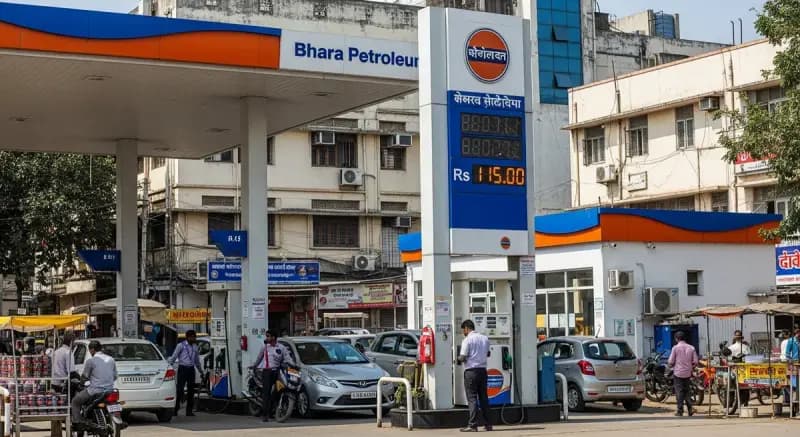
BS6 diesel fuel is fully backward compatible with older BS4 diesel engines. You can fill up at any pump with no engine damage or performance issues. There is no fuel-related reason to avoid an older diesel car in the near term.However, some longer-term trends are worth noting. Diesel pumps have been closing at some urban fuel stations, particularly in metro areas, as footfall shifts toward petrol and CNG vehicles. New fuel stations in metro suburbs are increasingly petrol-only. The price gap between diesel and petrol, which was as wide as Rs 26 per litre in 2014, has narrowed to roughly Rs 13 per litre as of 2025.
For daily driving in cities, diesel is available at most stations without issue. For long highway travel and rural driving, diesel infrastructure remains very strong and is unlikely to contract meaningfully given commercial transport's dependence on it. The risk is genuinely low in the near term, but the direction of travel is clear — urban diesel infrastructure is gradually thinning.
The Real Cost Comparison: When Diesel Wins and When It Does Not
The financial case for diesel depends almost entirely on how much you drive and where. Diesel engines typically deliver 25 to 30 percent better fuel efficiency than petrol equivalents in the same car — but only if you cover enough distance to offset diesel's higher maintenance costs.What diesel ownership actually costs more:
- Service intervals are 40 to 60 percent more expensive than petrol equivalents for the same car
- DPF cleaning or replacement for city-driven diesel cars: Rs 8,000 to Rs 15,000 every 15,000 to 20,000 km
- Turbocharger wear from insufficient warm-up cycles in stop-go traffic
- EGR valve failures on BS4 diesel engines: Rs 6,000 to Rs 12,000 per replacement
- Carbon decarbonisation services for city-driven diesel engines: Rs 4,000 to Rs 7,000
The break-even point sits at roughly 20,000 km per year. Below that, petrol's lower maintenance costs cancel out the fuel savings. Above that, diesel's efficiency advantage compounds meaningfully.
If your daily usage is mostly short trips in city traffic — under 10 km each way with frequent stops — diesel engines will struggle. They need regular highway runs to burn off carbon buildup and keep the DPF clean. A diesel car driven exclusively in Bengaluru or Delhi traffic, never taken on a highway, will accumulate repair costs that erase every rupee saved at the pump.
A Simple Decision Framework Before You Buy
Before signing any used diesel purchase, work through these five questions.How much do you drive annually? If your answer is under 18,000 km, petrol is almost certainly the smarter financial choice. If you are above 25,000 km, diesel's efficiency advantage starts making a real difference.
What does your typical trip look like? If more than half your driving is short city trips under 10 km, diesel maintenance costs will hurt you. If you regularly do highway travel or long intercity runs, diesel is in its element.
Where do you live and where might you move? If you are in NCR or there is a reasonable chance of relocating there, calculate the ownership horizon carefully against the 10-year age cap. In states without diesel-specific bans, the regulatory risk is lower.
How long do you plan to keep the car? A 3 to 4 year ownership cycle with high annual mileage and no NCR restrictions can still make diesel cost-effective. A longer hold with uncertain resale prospects in a metro market is harder to justify.
Have you had the diesel-specific components inspected? Before finalising any used diesel purchase, get a mechanic to specifically check DPF condition using a diagnostic scan, turbocharger play and oil seals, EGR valve operation, and injector spray patterns. These components fail expensively on high-mileage diesel engines. A surprise repair bill three months after purchase changes the entire financial picture.
The Bottom Line
Diesel is not dead in India's used car market. But it is no longer the default right answer it once was, especially for city buyers.If you drive over 2,000 km a month, live outside NCR, and plan to own the car for three to four years, a well-maintained diesel — bought at the right price — can still make financial sense. The fuel savings are real for high-mileage drivers, and the torque advantage on highways remains genuine.
If you drive modest distances in city traffic, live in NCR, or are planning to sell within a few years in a metro market, petrol or CNG alternatives will give you fewer complications, lower maintenance, and a more straightforward resale. Buy based on your actual numbers, not on what diesel used to represent. The market has changed. Your decision should reflect that. Nxcar's inspection and advisory process covers diesel-specific component evaluation and regional restriction mapping — so you know exactly what you are buying and where you can use it.
FAQs
Can I still buy BS6 diesel fuel for a pre-BS6 diesel car?
Yes. BS6 diesel is fully backward compatible with older BS4 diesel engines. You can fill up at any pump without causing engine damage or performance issues.
Does the 10-year diesel ban apply across all of India?
No. The 10-year age cap on diesel vehicles is specific to Delhi-NCR, enforced under an NGT order. Maharashtra allows 15 years. Karnataka, Tamil Nadu, and several other states currently have no diesel-specific age restrictions.
What is the minimum annual mileage that justifies buying a used diesel car?
The break-even point is roughly 18,000 to 20,000 km per year. Below that, diesel's higher service costs typically cancel out the fuel savings. Above 25,000 km annually, the efficiency advantage becomes meaningful.
What diesel-specific components should I check before buying a used diesel car?
Have a mechanic check DPF condition via diagnostic scan, turbocharger play and oil seals, EGR valve operation, and injector spray patterns. These are the components that fail expensively on high-mileage diesel engines.
Will a pre-BS6 diesel car depreciate faster than a petrol car?
Yes. Pre-BS6 diesel vehicles depreciate 15 to 25 percent faster than comparable petrol variants in metro markets, driven by buyer hesitation, shorter loan tenures from lenders, and regulatory restrictions in NCR and some metro cities.