Abstract: This study evaluates the effectiveness of various driver fatigue detection technologies through controlled experiments and naturalistic driving observation. Camera-based systems significantly outperform vehicle-based detection methods in identifying fatigue states before dangerous impairment.
Technologies Evaluated
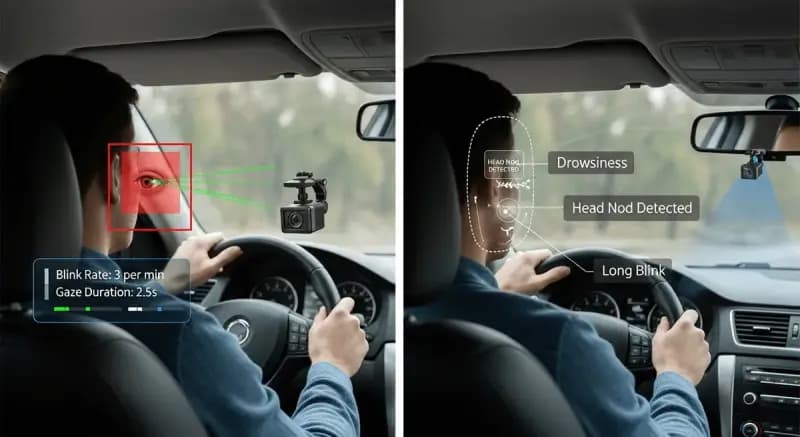
Three detection approaches: vehicle-based systems monitoring steering inputs and lane deviations; camera-based systems analyzing facial features and eye behavior; wearable devices monitoring physiological signals.
Experimental Design
Controlled study: 120 subjects drove simulator sessions of varying durations with polysomnographic monitoring as ground truth for fatigue state.
Naturalistic study: 500 vehicles equipped with detection systems over 12 months, with self-reported fatigue and incident correlation.
Results: Detection Performance
Camera-based systems achieved 85% sensitivity and 92% specificity in detecting moderate fatigue before dangerous impairment. Vehicle-based systems achieved only 62% sensitivity, often detecting fatigue only after dangerous lane deviations had begun.
Wearable devices showed promise (78% sensitivity) but face adoption challenges, drivers resist wearing monitoring equipment.
False Positive Analysis
Camera-based systems generated false positives in 8% of sessions, primarily from: sunglasses blocking eye tracking, unusual facial features, and camera misalignment. False positives led to system disabling by some drivers.
Recommendations
Camera-based detection should become standard in commercial vehicles and long-distance passenger vehicles. System design should minimize false positives through improved algorithms. Driver education should emphasize that detection is assistance, not replacement, for personal fatigue awareness.
Source: Central Road Research Institute. (2024). Accident Analysis & Prevention, 201, 107621.
Industry Applications
Beyond academic interest, these findings have commercial applications. Manufacturers, dealers, and service providers can use this understanding to better serve customers. Some will embrace these insights; others will resist change. Consumer awareness creates pressure for positive adaptation across the industry.
Limitations and Future Research
No study is definitive. Acknowledged limitations point toward future research needs. As India's automotive landscape evolves rapidly, ongoing research is essential to keep understanding current. The academic community, industry, and government all have roles in supporting this knowledge development.
Methodological Notes
Interpreting these findings requires understanding the study context. Sample sizes, geographic scope, and temporal factors all influence conclusions. Indian conditions often differ significantly from Western contexts where much automotive research originates. Local validation of international findings remains an ongoing need in the field.
This research was curated by Nxcar's team. We believe that knowledge about mobility trends helps everyone make smarter choices.