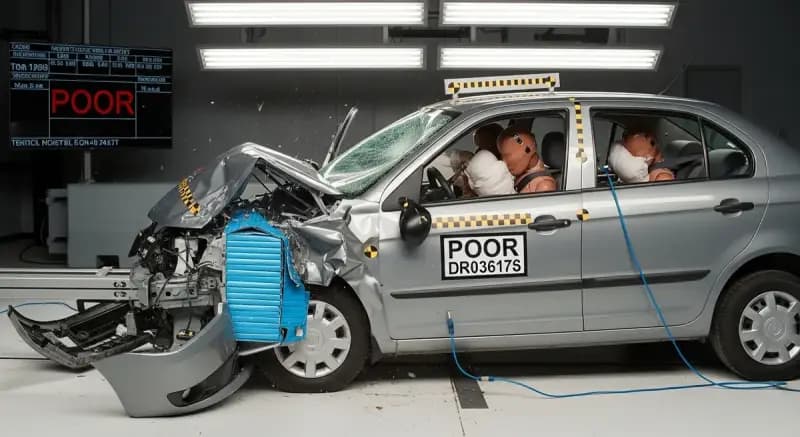
When Global NCAP started crash-testing Indian cars in 2014, the results were horrifying. The Maruti Alto, India's bestseller, scored zero stars. The Tata Nano crumpled like paper. Datsun Go passengers would have faced near-certain death in crashes that European buyers would have walked away from. Why were we being sold death traps?
Regulatory Failure
Until recently, India had no mandatory crash testing requirements. Manufacturers self-certified their vehicles against outdated standards that didn't include frontal crash tests. There was no independent verification. No accountability. Cars that couldn't pass tests anywhere else in the world were legal here.
This wasn't ignorance, manufacturers knew exactly what they were selling. These same companies produced safer cars for export markets. They chose to sell Indians less safe products because regulations permitted it and consumers didn't demand better.
Related Reading
Exploring Popular Cars for Women in India: A Comprehensive GuideThe Cost Excuse
The standard excuse: Indians are price-sensitive, and safety features add cost. This is both true and irrelevant. Yes, safety adds cost, perhaps Rs 30,000-50,000 per vehicle for meaningful improvements. But manufacturers routinely spend similar amounts on infotainment systems, chrome trim, and sunroofs that consumers demand.
The real issue was consumer unawareness. Nobody knew their cars were unsafe because no testing happened. In the absence of information, consumers optimized for visible features, not invisible crash structures.
Related Reading
Long-Term Review: 50,000 km with the Hyundai Ioniq 5Improvement, Finally
Things are improving. Bharat NCAP now requires crash testing. Recent Indian cars, Tata Nexon, Mahindra XUV300, Maruti Grand Vitara, score well. But the legacy fleet remains on roads: millions of zero-star vehicles that will remain in circulation for another decade.
Consumer Responsibility
We must demand safety. Choose crash-tested cars. Reject models without ratings. Spread awareness among friends and family. The change from 2014 to now happened because Global NCAP shamed the industry and informed consumers pressured manufacturers. We have power. Use it.
What Buyers Can Do
Empowered consumers are the best defense against questionable practices. Thorough research before entering a showroom, willingness to walk away from unfavorable deals, and sharing experiences with fellow buyers create accountability. Online forums and owner communities have become invaluable resources for cutting through marketing noise.
Industry Response
Some manufacturers recognize that customer dissatisfaction ultimately hurts their brands. Progressive companies are implementing stricter dealer oversight, transparent pricing, and customer feedback mechanisms. However, change is slow, and buyers should remain vigilant rather than assuming all players have reformed.
The Bigger Picture
These concerns aren't isolated incidents but symptoms of systemic issues in India's automotive retail landscape. The power imbalance between dealers and consumers, combined with information asymmetry, creates conditions ripe for exploitation. Understanding this context helps buyers protect themselves and push for better practices.
This take comes from Nxcar , where our love for cars includes protecting the people who drive them. Stay curious, stay skeptical.