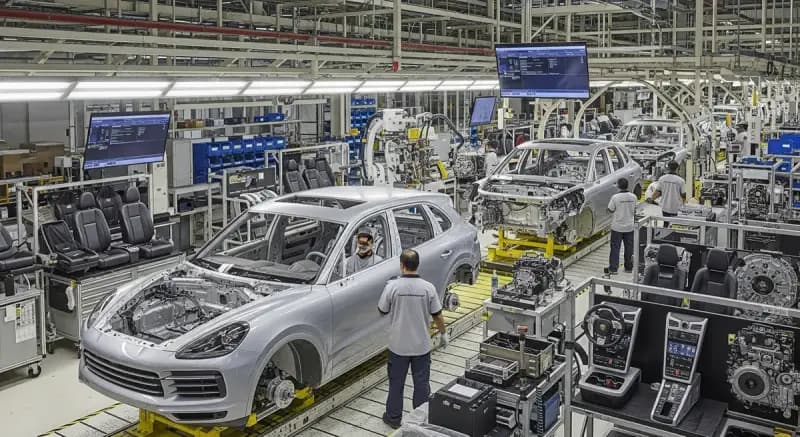
German sports car manufacturer Porsche has inaugurated its first Indian manufacturing facility, a semi-knockdown (SKD) assembly unit in Maharashtra that will produce the Macan and Cayenne SUVs locally. The investment signals Porsche's commitment to the rapidly growing Indian luxury market.
The facility, located at Volkswagen Group's Pune plant, will assemble approximately 4,000 vehicles annually. By avoiding the 110% import duty on completely built units, Porsche can reduce prices by Rs 30-40 lakh per vehicle while maintaining quality standards.
Pricing Impact
The locally assembled Macan will start at Rs 87 lakh, compared to Rs 1.39 crore for the imported model, a price reduction of approximately Rs 52 lakh. The Cayenne will retail from Rs 1.24 crore versus Rs 1.95 crore for the import.
Related Reading
Why Hybrids, Software, and Localization Are Winning in Automotive Industry Trends That Matter"This makes Porsche ownership possible for a significantly larger customer base," said Porsche India Brand Head Manolito Vujicic. "We expect to double our India volumes within two years."
Assembly Process
The SKD operation receives pre-assembled component kits from Germany, which are then assembled in India. This differs from full manufacturing, which would require extensive supply chain development. Critical systems including engines, transmissions, and electronics are assembled in Germany to maintain quality.
Related Reading
Upcoming Cars That Could Disrupt the MarketApproximately 150 skilled technicians have been trained in Germany to operate the facility. Quality control systems mirror global Porsche standards, with each vehicle undergoing the same testing protocols used at German factories.
Market Strategy
Porsche sold 2,100 vehicles in India in 2024, a record figure that nonetheless represents a fraction of its potential. The company believes India could become a top-10 global market by 2030 if economic growth continues and infrastructure improves.
The investment also positions Porsche to assemble electric models locally as the EV market matures. "Electric vehicle assembly is the logical next step," Vujicic acknowledged.
Industry Impact
This development carries significant implications for India's automotive ecosystem. Industry analysts suggest that the ripple effects will be felt across the supply chain, from component manufacturers to dealership networks. The competitive landscape is likely to shift as established players respond to market dynamics and consumer expectations evolve.
Consumer Perspective
For Indian car buyers, these changes present both opportunities and considerations. Price-conscious consumers may find new value propositions emerging, while those focused on long-term ownership costs should factor in evolving technology and service networks. The market is becoming increasingly sophisticated, requiring buyers to make more informed decisions.
The Nxcar team curated this piece with the same passion that drives our love for vintage beauties and modern machines alike.