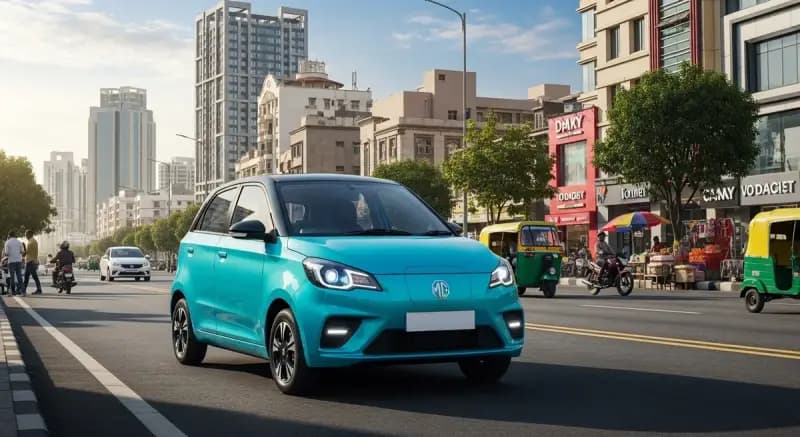
MG Motor India has launched the Comet EV at an introductory price of Rs 9.99 lakh, making it India's most affordable electric car from a mainstream manufacturer. The compact city car is expected to significantly expand the addressable EV market by bringing electric mobility within reach of middle-class buyers.
The two-door Comet features a 17.3 kWh battery delivering a claimed range of 230 kilometers, sufficient for urban commuting. The vehicle measures just 2.974 meters in length, making it the smallest four-wheeled electric vehicle in the Indian market.
Target Customer
MG positions the Comet as a second car for urban families or a primary vehicle for young professionals in metros. The tiny footprint offers advantages in congested cities where parking is a constant challenge.
Related Reading
Why Your Next Car Should Be Boring"Not everyone needs a 500 km range vehicle," said MG Motor India President Gaurav Gupta at the launch. "For most urban users, a 230 km range covers a full week of commuting. We've sized the battery for real-world needs, not spec-sheet bragging rights."
Competitive Positioning
At Rs 9.99 lakh, the Comet undercuts the Tata Tiago EV (Rs 11.99 lakh starting) by Rs 2 lakh, a significant gap in the price-sensitive Indian market. However, the Tiago offers substantially more interior space and a longer 315 km range.
Related Reading
Vehicle Weight Distribution: Why Balance MattersAuto analysts expect the Comet to carve its own niche rather than directly competing with the Tiago. "These are different vehicles for different needs," notes Autocar India editor Hormazd Sorabjee. "The Comet is a city runabout; the Tiago is a family car."
Manufacturing Details
The Comet is imported from MG's parent company SAIC's facility in China as a completely built unit, though MG has announced plans to localize production within 18 months if volumes justify investment. Current import duties make the pricing aggressive by industry standards.
MG targets sales of 1,500-2,000 units monthly, which would make the Comet a significant contributor to India's still-nascent four-wheeled EV market.
Regional Variations
The impact will vary across different Indian markets. Metropolitan areas with higher purchasing power may see accelerated adoption of new technologies and brands. Tier-2 and Tier-3 cities, which increasingly drive automotive sales growth, will likely follow different adoption curves based on infrastructure readiness and price sensitivity.
Looking Ahead
As the Indian automotive market matures, developments like these reshape the competitive landscape. The coming years will reveal which players successfully navigate these transitions and which struggle to adapt. Consumers ultimately benefit from increased competition and innovation, though the transition period may bring uncertainty for some segments.
Curated by Nxcar: Where passion meets expertise. Our love for cars old and new drives every story we tell.