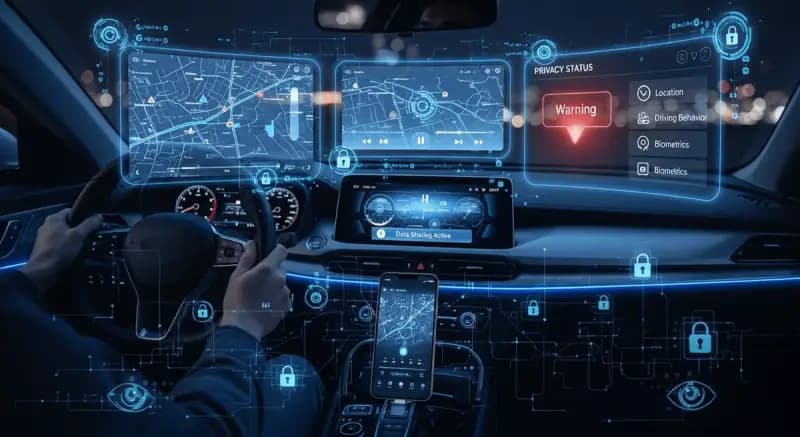
The Ministry of Electronics and Information Technology has issued draft guidelines for connected vehicle data collection and privacy, responding to growing concerns about the vast amounts of personal information modern cars can collect and transmit to manufacturers.
The guidelines propose that vehicle manufacturers obtain explicit consent for data collection beyond essential safety and regulatory functions. They also mandate data localization, requiring vehicle data to be stored on servers within India, and give consumers the right to delete collected data.
Industry Context
Modern connected cars generate approximately 25 gigabytes of data per hour of driving. This includes location history, driving behavior, voice commands, phone contacts (when synced), and even biometric data from health-monitoring steering wheels. Manufacturers use this data for service improvements, insurance partnerships, and targeted marketing.
Related Reading
Best Car for Travelling Long Distances in India"Most consumers have no idea how much data their car collects," says Internet Freedom Foundation executive director Apar Gupta. "Your car knows more about your daily movements than your smartphone."
Industry Response
The Society of Indian Automobile Manufacturers (SIAM) has expressed concerns about implementation complexity. "Data collection is fundamental to delivering connected services consumers want," argues SIAM Director General Rajesh Menon. "Overly restrictive regulations could prevent Indian consumers from accessing features available globally."
Related Reading
CVT vs DCT vs Torque Converter: The Transmission GuideHowever, some manufacturers have welcomed the guidelines. Tata Motors, which offers connected features across its range, stated that "clear guidelines create a level playing field and build consumer trust."
Global Precedent
The guidelines mirror regulations emerging globally. The European Union's GDPR already applies data protection principles to connected vehicles. California's Consumer Privacy Act allows consumers to access and delete vehicle data. India's approach aligns with this global trend while adapting to local requirements.
Final guidelines are expected following a 60-day public consultation period.
Consumer Perspective
For Indian car buyers, these changes present both opportunities and considerations. Price-conscious consumers may find new value propositions emerging, while those focused on long-term ownership costs should factor in evolving technology and service networks. The market is becoming increasingly sophisticated, requiring buyers to make more informed decisions.
Regional Variations
The impact will vary across different Indian markets. Metropolitan areas with higher purchasing power may see accelerated adoption of new technologies and brands. Tier-2 and Tier-3 cities, which increasingly drive automotive sales growth, will likely follow different adoption curves based on infrastructure readiness and price sensitivity.
Brought to you by Nxcar , where our love for cars, from timeless classics to modern marvels, fuels everything we do. Stay informed, stay passionate.