Quick Summary: Brake condition is one of the most overlooked checks in India's used car market — and one of the most revealing. Worn pads, scored rotors, and neglected brake fluid are not just safety concerns. They are evidence of how the car was actually maintained, and they can mean immediate repair costs of Rs 30,000 to Rs 80,000 that land in your lap weeks after purchase. Before you finalise any used car deal or take a loan, here is what you need to know about checking brakes, reading what they reveal, and using that information to negotiate smarter.
You've found a used car that looks right. The price is tempting. The seller sounds confident. The odometer reading seems reasonable. But there's one thing most Indian buyers barely glance at before signing — the brakes.
Not because brakes are unimportant. Everyone knows they matter for safety. The real issue is that most buyers don't realise how much brake condition can tell you about the car's entire maintenance history, and how much it can quietly cost you in the first few months of ownership.
Before you finalise a used car purchase — and certainly before you take a loan — understanding brake condition is one of the smartest things you can do.
Why Brakes Reveal More Than Just Safety
When a car is maintained properly, the brakes show it. When a car has been stretched, neglected, or prepared just for resale, the brakes show that too.Brake pad thickness, rotor condition, fluid quality, and wear patterns are not just safety checkboxes. They are evidence of how the previous owner actually treated the car — not how they describe it in the listing.
A seller can polish the body, install fresh seat covers, and clean the engine bay before you arrive. They cannot fake healthy brake components during a proper inspection.
This is why brake condition is one of the most reliable windows into a car's real history.
The Indian Driving Reality Makes This More Important, Not Less
Indian roads are not gentle on cars. Bumper-to-bumper traffic in cities like Delhi, Mumbai, Bengaluru, and Pune means constant braking, stop-go driving, and clutch abuse that accelerates wear at a pace that surprises many buyers.Add to that the speed breakers every few hundred metres, potholes that jolt the entire suspension, summer heat that stresses brake fluid, and monsoon conditions that accelerate rust and corrosion on rotors — and you have driving conditions that punish a neglected brake system fast.
A car that was driven mostly in city traffic for four or five years may have far more brake wear than its odometer suggests. And a car sold just before the brakes gave trouble is more common in the used market than most buyers realise.
What Brake Inspection Actually Involves
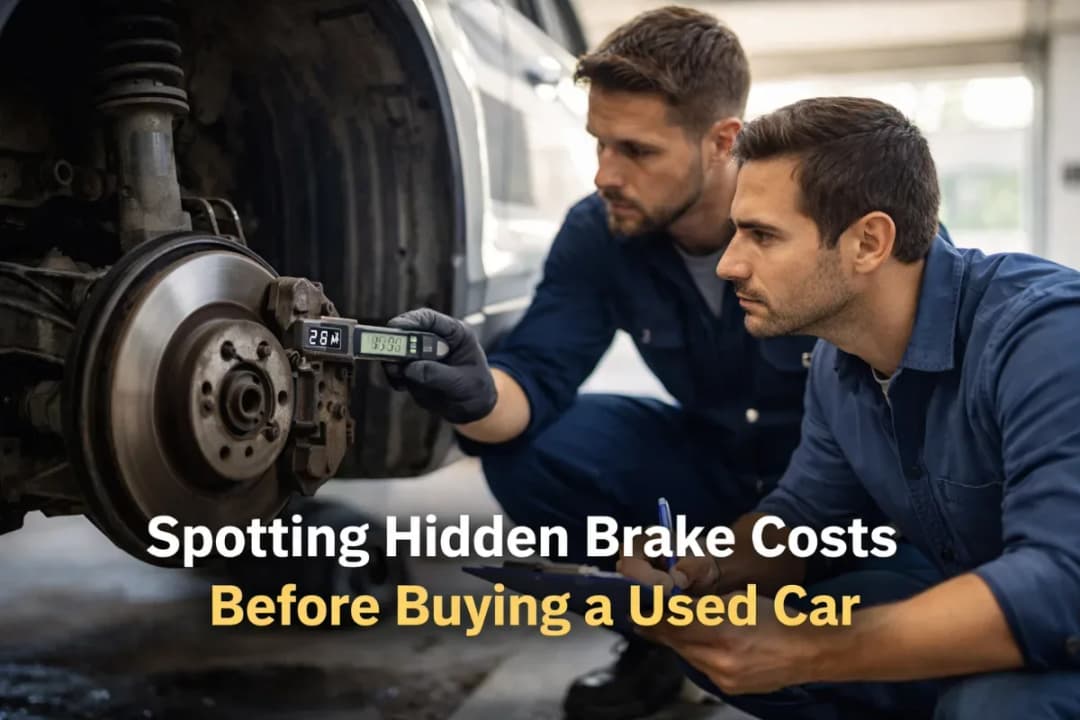
A proper brake inspection before buying a used car should cover the following:- Brake pad thickness: Pads below 3mm need immediate replacement. At that level, the cost is typically between Rs 8,000 and Rs 20,000 depending on the car model and whether you go to an authorised service centre or a trusted independent workshop.
- Rotor condition: Rotors worn below manufacturer specification, heavily scored, or showing heat cracks must be replaced. Rotor replacement on both axles can run between Rs 15,000 and Rs 45,000 depending on the vehicle.
- Brake fluid condition: Old or contaminated fluid absorbs moisture over time, reducing braking effectiveness. Fluid flush and replacement is relatively inexpensive but tells you a lot about how regularly the car was serviced.
- Caliper condition: Seized or sticky calipers cause uneven braking, accelerate tyre wear, and can damage rotors. Caliper repairs or replacements can add Rs 10,000 to Rs 30,000 per wheel depending on the part and the car.
- ABS warning light and sensor function: Many buyers ignore a briefly flickering ABS light. A faulty ABS sensor can cost Rs 8,000 to Rs 25,000 to diagnose and fix properly.
A pre-purchase inspection from an independent mechanic — not the seller's workshop — typically costs between Rs 1,500 and Rs 5,000. That small investment can save you several times that amount.
How Brake Wear Patterns Tell You About the Previous Driver
Even wear across all four wheels generally indicates a car that was driven sensibly and maintained regularly.Uneven wear — where one side is significantly more worn than the other — can indicate a seized caliper, an alignment problem, or aggressive driving habits that stressed one side of the braking system repeatedly.
Front pads wearing faster than rear is normal on most cars. But if the gap is extreme, or if rear pads are completely fresh while front pads are near the end of their life, that imbalance is worth investigating.
Scored or grooved rotors that have been used well past the point of replacement tell you the owner delayed maintenance and drove on metal-to-metal contact. At that stage, the rotors are not the only thing that suffers — calipers and wheel bearings begin to take damage too, and the repair bill grows quickly.
Using Brake Condition to Negotiate the Right Price
This is where understanding brakes becomes financially useful, not just technically interesting.If a pre-purchase inspection reveals that the car needs brake pads on all four wheels, rotor replacement on the front axle, and a brake fluid flush, that is a documented, quantifiable cost — potentially Rs 30,000 to Rs 60,000 depending on the model.
That number gives you genuine negotiating power. Rather than making vague complaints about the car feeling old, you have a written inspection report with specific findings and a repair estimate from a workshop. Present that to the seller. Ask for a corresponding reduction in price, or ask that the repairs be completed before you take possession.
Most sellers will negotiate. They know the next buyer will find the same issues. A serious seller who has priced fairly will often split the cost or agree to repairs. A seller who refuses entirely is giving you useful information too.
Factoring Brake Costs Into Your Loan Calculation
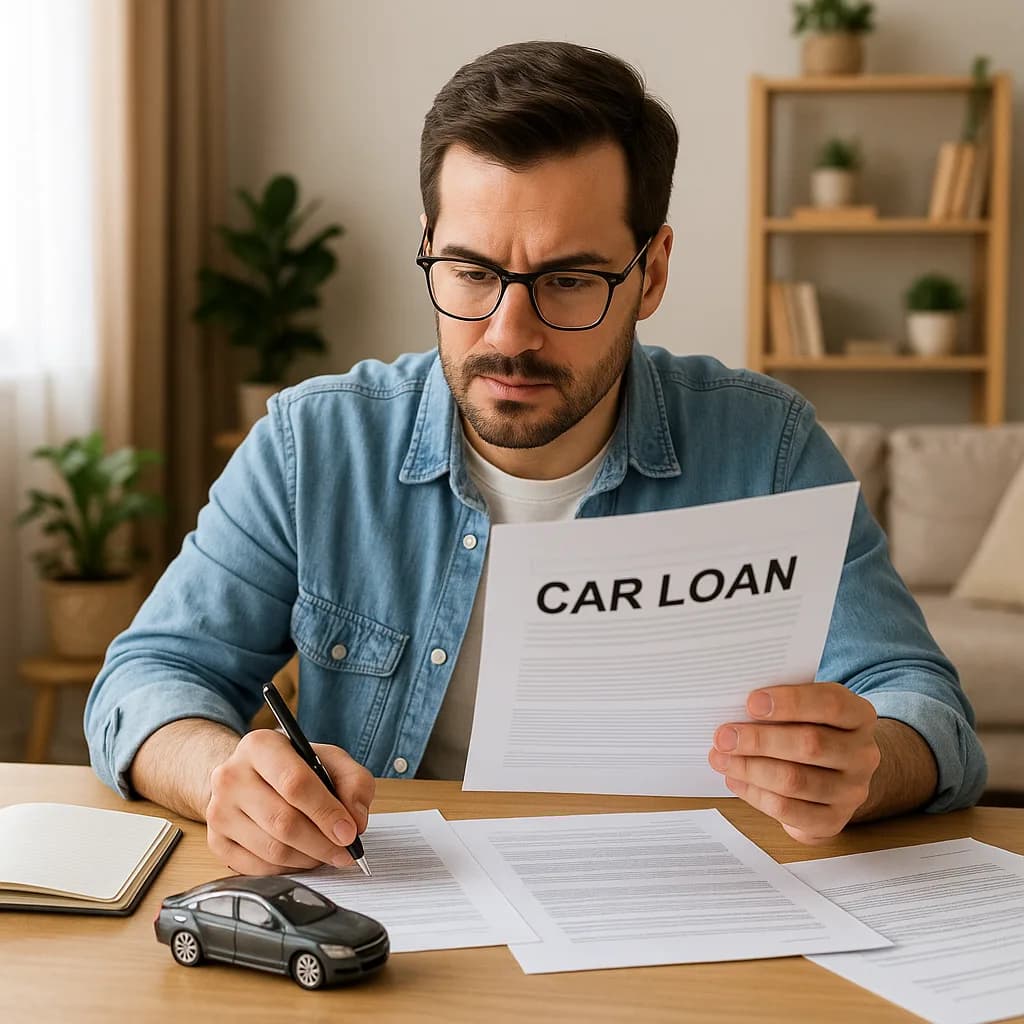
If you are financing the purchase, brake repair costs matter beyond the negotiation.A used car priced at Rs 6 lakh with Rs 40,000 in immediate brake work is not a Rs 6 lakh purchase. It is a Rs 6.4 lakh purchase — and that difference should be factored into your down payment planning and your monthly budget, not discovered as a surprise two weeks after delivery.
Never assume deferred maintenance will wait. A car where the brakes are already past service limit will need attention immediately. Budgeting only for the EMI without accounting for first-month repairs is one of the most common financial mistakes in used car buying.
Platforms like Nxcar help buyers understand a vehicle's actual condition before purchase, so the number you see is closer to the real cost of ownership — not just the sticker price.
Warning Signs You Should Never Ignore During a Test Drive
During the test drive, pay attention to:- Squealing or grinding when you apply the brakes
- Vibration or pulsing through the brake pedal
- The car pulling to one side when braking
- A soft or spongy pedal feel
- The brake warning light on the instrument cluster
Any of these during a test drive should be taken seriously, not explained away by the seller as a minor issue that will sort itself out. It will not sort itself out. It will get worse.
The Smarter Way to Buy
Brake condition is not the only thing to check before buying a used car in India. But it is one of the most revealing and one of the most overlooked.A car that looks clean and drives passably on a short spin can still be carrying Rs 50,000 or more in deferred brake maintenance that will land in your lap within weeks of purchase.
The buyers who avoid this outcome are the ones who ask for an independent inspection, understand what the findings mean, and use that information to make a smarter decision — on price, on timing, or on whether to walk away entirely.
Check the brakes before you sign anything. Your future self will thank you.
FAQs
Why does brake condition matter when buying a used car in India?
Because brakes reveal how the car was actually maintained, not how the seller describes it. Worn or neglected brakes also represent immediate out-of-pocket repair costs that directly affect your total purchase budget.
How much does a brake inspection cost before buying a used car?
A pre-purchase inspection from an independent mechanic typically costs between Rs 1,500 and Rs 5,000. It is one of the most cost-effective steps you can take before finalising any used car purchase.
Can I use brake condition to negotiate the price?
Yes. A written inspection report with specific findings and a repair estimate gives you concrete, documented leverage to ask for a price reduction or request that repairs be completed before handover.
What are the most expensive brake repairs to watch out for?
Rotor replacement, seized caliper repair, and ABS sensor failure are typically the costliest. Combined repairs across both axles can run anywhere from Rs 30,000 to Rs 80,000 depending on the car model and service centre.
What should I listen and feel for during a test drive?
Squealing or grinding sounds, vibration through the brake pedal, the car pulling to one side, a soft pedal feel, or a lit brake warning light are all signs that the brake system needs immediate professional attention.