Suspension geometry, the precise positioning of control arms, springs, and mounting points, determines how a vehicle responds to driver inputs and road surfaces. Engineers spend years optimizing geometry that drivers experience but rarely understand.
Roll Center
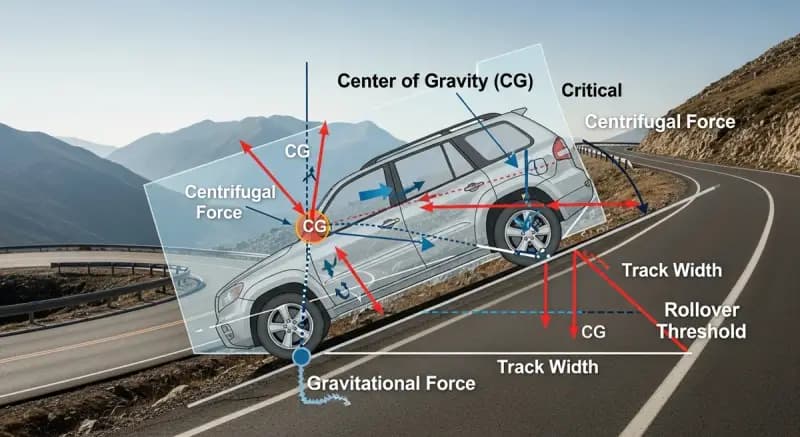
The roll center is the virtual pivot point around which the body rolls during cornering. Its height relative to the center of gravity determines roll tendency. Lower roll centers reduce body roll but increase jacking forces; optimization involves trade-offs.
Anti-Dive and Anti-Squat
Suspension geometry can resist dive during braking and squat during acceleration. Careful positioning of control arm mounting points creates geometric anti-dive/squat, reducing pitch motion without stiffening suspension. Too much creates binding and harshness.
Bump Steer
Ideally, wheel direction shouldn't change as suspension moves through travel. Improper geometry creates bump steer, the wheel steers itself over bumps. This causes unpredictable handling and driver fatigue. Correcting bump steer requires precise tie rod positioning.
Camber Change
Geometry determines how camber changes through suspension travel. Ideally, camber stays near optimal through the suspension's range, negative during compression for cornering grip. Different suspension types achieve this with varying success.
Suspension Types
MacPherson strut: simple, compact, adequate, but camber change isn't ideal. Double wishbone: better camber control, more complex. Multi-link: flexible packaging with good geometry, complex and expensive. Each choice reflects priorities.
Modifications Implications
Lowering vehicles changes geometry, usually negatively. Roll centers drop excessively, camber goes too negative, bump steer develops. Proper lowering requires geometry correction, just installing lower springs creates problems rather than improvements.
Technical Considerations
Understanding these engineering principles helps owners make better maintenance decisions. When mechanics explain repairs, informed owners can evaluate recommendations critically. This knowledge prevents unnecessary work while ensuring critical maintenance isn't deferred. The goal isn't to become a mechanic but to be a smarter vehicle owner.
Real-World Applications
Theory translates to practice in specific ways. Under Indian driving conditions, with their unique combination of heat, dust, traffic, and road quality, these technical factors manifest differently than in laboratory conditions. Owners should calibrate expectations accordingly, recognizing that advertised specifications often assume ideal conditions.
Future Developments
Automotive technology continues evolving rapidly. What seems cutting-edge today becomes standard tomorrow. Understanding current technical foundations helps owners anticipate future developments and make purchase decisions that won't become obsolete prematurely. The pace of change, particularly in electrification and connectivity, makes this foresight increasingly valuable.
Curated with technical precision by Nxcar. We love cars for their stories AND their specifications.