
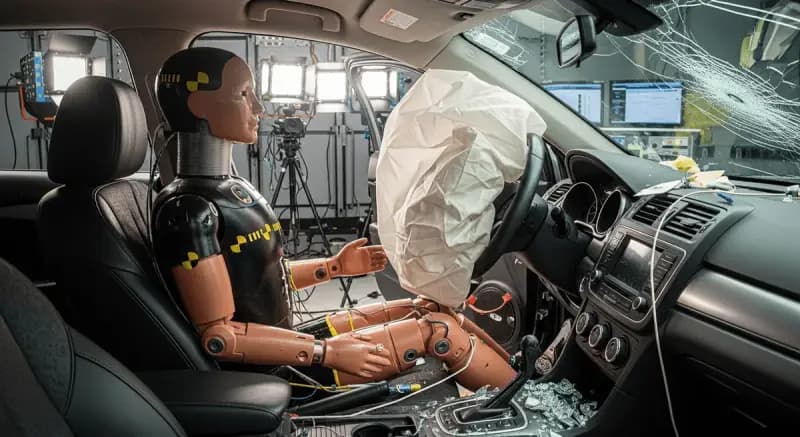
The Ministry of Road Transport and Highways has announced that all passenger vehicles sold in India must be equipped with a minimum of six airbags starting October 1, 2025, a decision that will significantly impact entry-level car pricing but potentially save thousands of lives annually.
The mandate applies to all new vehicles manufactured after the deadline, giving automakers approximately 18 months to redesign their base variants. Currently, only two front airbags are mandatory, though most manufacturers offer four airbags in mid-range variants.
Safety Impact Analysis
According to data from the National Crime Records Bureau, India recorded over 155,000 road accident deaths in 2023, the highest globally. Studies by the Global NCAP suggest that side and curtain airbags could reduce fatality rates in side-impact collisions by up to 45%.
Related Reading
Why Manual Cars Are Still Loved in India"This is a watershed moment for automotive safety in India," said Union Minister Nitin Gadkari. "We cannot continue to accept such high road fatality numbers when technology exists to prevent these deaths."
Industry Concerns
Automobile manufacturers have expressed mixed reactions. While supporting safety improvements, they warn that costs will increase by Rs 30,000 to Rs 50,000 per vehicle, potentially pricing out budget-conscious buyers.
Related Reading
Dealership vs Owner Where Should You Actually Buy a Used CarThe Society of Indian Automobile Manufacturers (SIAM) has requested a phased implementation, suggesting that smaller cars under 1200cc be given additional time. "We want to make cars safer, but we also need to ensure mobility remains affordable for the masses," said SIAM President Vinod Aggarwal.
Consumer Perspective
Consumer groups have largely welcomed the mandate. "For too long, Indian consumers have been offered watered-down safety features compared to global markets," said Consumer Voice spokesperson Ashim Sanyal. "This brings us closer to global standards."
Related Reading
Aerodynamic Efficiency in Contemporary SUV Designs: A Computational Fluid Dynamics StudyThe mandate is expected to accelerate the shift towards premium variants, as the price gap between base and mid-variants narrows. It may also boost the used car market as buyers seek pre-mandate vehicles at lower prices.
Regional Variations
The impact will vary across different Indian markets. Metropolitan areas with higher purchasing power may see accelerated adoption of new technologies and brands. Tier-2 and Tier-3 cities, which increasingly drive automotive sales growth, will likely follow different adoption curves based on infrastructure readiness and price sensitivity.
Looking Ahead
As the Indian automotive market matures, developments like these reshape the competitive landscape. The coming years will reveal which players successfully navigate these transitions and which struggle to adapt. Consumers ultimately benefit from increased competition and innovation, though the transition period may bring uncertainty for some segments.
Industry Impact
This development carries significant implications for India's automotive ecosystem. Industry analysts suggest that the ripple effects will be felt across the supply chain, from component manufacturers to dealership networks. The competitive landscape is likely to shift as established players respond to market dynamics and consumer expectations evolve.
Related Reading
Why the DeLorean is Still Cool 40 Years LaterConsumer Perspective
For Indian car buyers, these changes present both opportunities and considerations. Price-conscious consumers may find new value propositions emerging, while those focused on long-term ownership costs should factor in evolving technology and service networks. The market is becoming increasingly sophisticated, requiring buyers to make more informed decisions.
Curated with care by the Nxcar team. Our fascination with automobiles , old and new , inspires us to bring you stories that matter.