Introduction: The Rise of Superbikes in Indian Cinema
Back in 2004, Bollywood saw a major shake-up in the world of action films with the release of Dhoom. Directed by Sanjay Gadhvi and produced by Yash Raj Films, this sleek thriller wasn’t just another movie, it was a game-changer. Sure, the catchy soundtrack and John Abraham’s charming anti-hero character stole the limelight, but let’s be honest, the true scene-stealers were the motorcycles. With their sheer speed and adrenaline-pumping action, these superbikes captured the hearts and minds of an entire generation.
Interestingly, the film was originally envisioned with supercars taking centre stage. But then came a bold pivot, replacing cars with motorcycles. This wasn’t just a practical decision; it completely reshaped the film’s identity, turning Dhoom into a cultural phenomenon. Let’s dive into the iconic bikes, the behind-the-scenes magic, and the legacy of this action-packed blockbuster.
John Abraham and the Legendary Suzuki Hayabusa
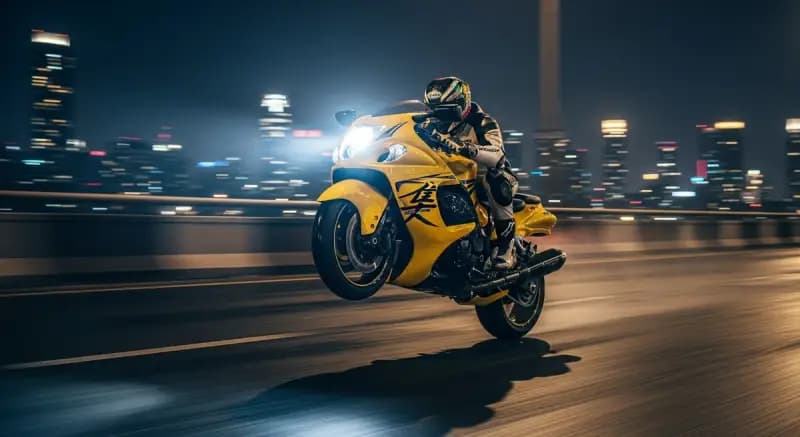
At the very core of Dhoom was the legendary Suzuki GSX-1300R Hayabusa, ridden by John Abraham as Kabir, the clever ringleader of a gang of daredevil thieves. This red-and-black beauty wasn’t just a bike, it was Kabir’s signature weapon, perfectly mirroring his bold and rebellious personality.
The Hayabusa, celebrated as the world’s fastest production motorcycle at the time, capable of hitting speeds over 300 km/h, became an overnight sensation. Its sleek curves, powerful engine, and unmistakable growl ignited the dreams of bike enthusiasts across India. Kabir’s electrifying escapes on this speed demon, zipping through the bustling streets of Mumbai, showcased not only the bike’s capabilities but also cemented its place in cinema history.
Other Superbikes That Stole the Spotlight
While the Hayabusa was undoubtedly the star attraction, Dhoom also featured other incredible motorcycles. The Suzuki GSX-R600 and Suzuki Bandit 1200cc added their own unique flair to the action-packed sequences. The GSX-R600, a sporty and agile machine, was the perfect choice for the gang’s high-speed heists, while the Bandit 1200cc brought a raw, rugged power to the mix. Together, these bikes created jaw-dropping chase scenes that had viewers clinging to their seats.
Producer Aditya Chopra clearly had a vision,and a budget to match. In a surprising twist, it’s said that more money was spent on acquiring and showcasing these stunning bikes than on the combined salaries of the lead actors, including Abhishek Bachchan, John Abraham, and Uday Chopra. That commitment to authenticity paid off, elevating the motorcycles from mere props to essential characters in their own right.
Behind the Scenes: Crafting the Action
Drawing inspiration from Hollywood’s high-octane action flicks, the filmmakers made a bold choice to place motorcycles at the heart of Dhoom. But making this concept work on India’s bustling roads was no small feat. The Suzuki superbikes, still a rarity in India at the time, were specially flown in from Japan. Their immense power and precision meant meticulous planning was needed to ensure the safety of everyone involved during filming.
Related Reading
How to Sell Your Used Car Quickly in IndiaJohn Abraham, a passionate biker himself, went through intense training to perform many stunts personally. His genuine love for motorcycles and dedication to the role added a layer of authenticity that fans couldn’t get enough of. Of course, professional stunt riders were also brought in to handle the trickier moves, blending real-life stunts with computer-generated effects to create those jaw-dropping moments we all remember.
One unforgettable scene,the leap over a moving train,stands out as a perfect example of the filmmakers’ commitment to pushing boundaries. A seamless mix of practical effects and CGI, it remains one of the most iconic sequences in Bollywood action history.
The Motorcycles as Extensions of Character
In Dhoom, the motorcycles weren’t just part of the scenery; they were an extension of the characters themselves. Kabir’s Hayabusa, for instance, wasn’t just a bike, it was a symbol of his fearless, unstoppable nature,a perfect representation of speed, rebellion, and freedom. On the other hand, ACP Jai Dixit, played by Abhishek Bachchan, relied on more practical vehicles, a reflection of his grounded and methodical approach to law enforcement.
This contrast between the sleek, high-performance bikes of Kabir’s gang and the no-nonsense police vehicles added an extra layer of storytelling. The bikes weren’t just tools for chases, they became metaphors for the eternal struggle between chaos and order.
Related Reading
Lidar vs Radar vs Camera Explained: Understanding Sensor Fusion in ADAS 2.5+ for Used Car BuyersImpact on Indian Pop Culture
Dhoom didn’t just stop at entertaining audiences,it sparked a full-blown motorcycle revolution in India. The Hayabusa earned cult status, affectionately dubbed the “Dhoom bike” by fans. Across the country, motorcycle clubs began popping up, inspired by the film’s thrilling depiction of superbikes. For many, owning one of these machines became a dream, a symbol of ambition and freedom.
The film also gave a boost to the automotive industry, with manufacturers taking note of the growing appetite for high-performance bikes. Dhoom proved that vehicles could be more than just background props; they could be stars in their own right, integral to the storytelling process.
The Legacy of Speed
Dhoom laid the groundwork for a franchise that continued to raise the stakes with even more exotic machines and daring stunts. While the sequels introduced flashier vehicles and more elaborate action, the original film remains iconic for its groundbreaking portrayal of motorcycles and their role in its narrative.
Related Reading
Top Features That Increase Used Car ValueIn the years that followed, Bollywood’s relationship with speed and action evolved. Films like Race and Bang Bang! tried to replicate the magic of Dhoom, but few managed to achieve the seamless integration of action and vehicles that made the original so memorable. The legacy of Dhoom endures as a shining example of how speed and storytelling can come together to create something truly unforgettable.
Fun Trivia
- John Abraham was so smitten with the Suzuki Hayabusa during filming that he went on to buy one for himself.
- The Hayabusa featured in the movie was specially flown in from Suzuki’s Japan facility, as it was still a rarity in India at the time.
- Although professional stunt riders executed many of the complex sequences, John trained extensively to perform several stunts on his own.
- The term “Dhoom bike” became a popular nickname for high-performance motorcycles across India.
- The iconic train leap scene was a mix of real-life stunts and CGI, making it one of Bollywood’s most challenging action sequences ever.
Closing Thoughts: A Cinematic Revolution
Dhoom wasn’t just a film; it was an experience that redefined how we see speed, action, and superbikes in Indian cinema. It ignited a love for motorcycles, transformed city streets into imagined racetracks, and left an indelible mark on India’s automotive culture. Even today, the sound of a roaring superbike can take fans back to the thrill of 2004 and that unforgettable ride. For those who felt the rush, Dhoom was more than a chase,it was the beginning of Bollywood’s enduring romance with high-speed action.
If you’re as obsessed with the roar of a superbike as we are, you’re in the right place. At Nxcar, we celebrate the adrenaline, the machines, and the stories that define high-speed action. Keep the throttle open, and stay with us for more thrilling adventures.