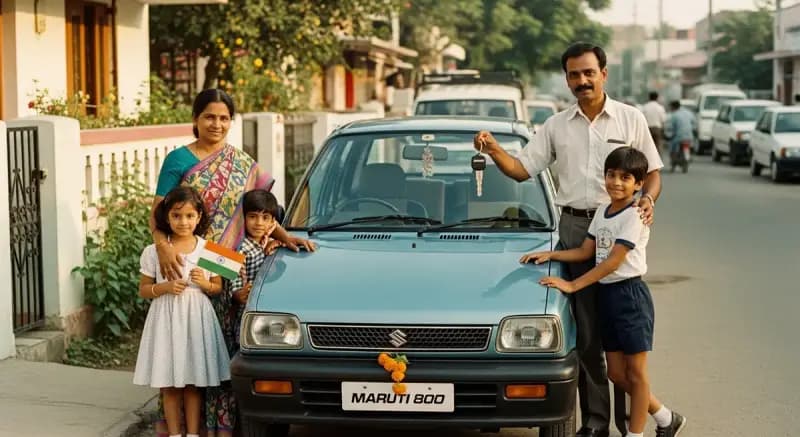
Before the Maruti 800, car ownership was a distant dream for middle-class India. After it, a nation discovered mobility. No single vehicle has transformed Indian society as profoundly as this tiny, humble hatchback that taught millions to drive and gave them somewhere to go.
Pre-Maruti India
In 1983, car ownership was rare, elitist, and bureaucratic. The Ambassador and Premier Padmini were the only options, both expensive and awaiting years-long waiting lists. Cars were for ministers, industrialists, and the exceptionally connected.
The average family aspired to scooters. The idea of owning a car was fantasy.
The Revolution
Maruti 800's launch at Rs 47,500, affordable with financing, democratized mobility. Waiting periods existed but were manageable. Quality exceeded anything India had seen. Fuel efficiency made running costs bearable.
Suddenly, cars were achievable. Teachers, shopkeepers, and mid-level employees could aspire to ownership. The waiting list for Maruti became a topic of dinner conversations across India.
Social Transformation
The 800 changed family dynamics. Sunday drives became possible. Relatives in other cities became visitable. Job opportunities in distant suburbs became accessible. The car expanded geographic possibility.
It changed gender dynamics too. Women learned to drive in 800s, its light controls and compact size made it approachable. Female mobility increased as families acquired second cars.
End of an Era
Production ended in 2014 after 2.66 million units. By then, Maruti offered dozens of models; the 800 had become nostalgic rather than aspirational. But its legacy persists in every Indian family who remembers their first car, their first road trip, their first taste of automotive freedom.
The 800 didn't just sell cars, it sold the possibility of a different life.
Cultural Significance
Cars have always been more than transportation in India, they're status symbols, family members, and markers of progress. Understanding this cultural context enriches appreciation for automotive heritage. The emotional connections people form with their vehicles transcend rational economic calculations.
Generational Perspectives
Different generations relate to automotive culture differently. Those who remember the scarcity of the license raj era view car ownership through a different lens than millennials who've known only market abundance. These varying perspectives create rich narratives around automotive history and future directions.
Regional Variations
India's diverse regions each have unique automotive cultures. From the decorated trucks of Punjab to the vintage car rallies of Mumbai to the modified vehicles of Chennai, local traditions shape how communities relate to automobiles. This diversity is part of India's rich automotive heritage.
Preservation and Memory
As automotive technology evolves rapidly, preserving heritage becomes increasingly important. Museums, collector communities, and documentation efforts ensure that future generations can connect with automotive history. The stories embedded in these machines deserve to be remembered and celebrated.
This story was curated by the Nxcar team , a group of car lovers who believe that automobiles carry our memories, dreams, and cultural heritage.