Introduction
The Mahindra Thar has long held a special place in the hearts of automotive enthusiasts across India. Known for its rugged charm and off-road prowess, the Thar is synonymous with adventure and durability. As the world pivots towards more sustainable automotive solutions, Mahindra takes a bold step forward by introducing the Thar EV.
Stepping into the electric arena is no small feat, especially for a brand so deeply rooted in the traditional combustion engine ethos. The Thar EV promises to embody everything fans love about the original while embracing the innovative features of an electric vehicle (EV). But how significant are these changes? This article explores the differences and upgrades between the Mahindra Thar EV and its standard counterpart.
Design and exterior
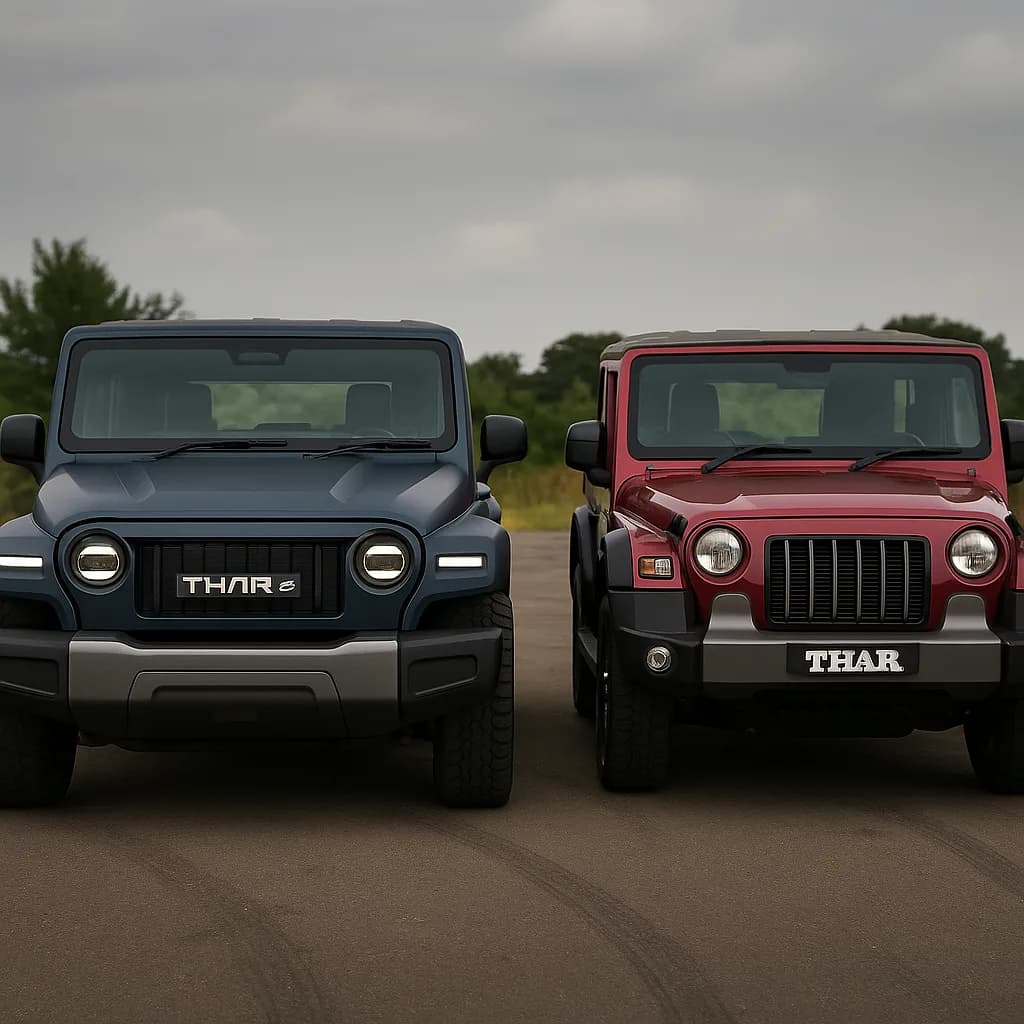
From a distance, the Mahindra Thar EV retains the robust silhouette that the Thar is known for. Its bold stance remains a testament to its off-road capability. However, upon closer inspection, one notices subtle yet impactful design tweaks aimed at improving aerodynamics and efficiency.
The Thar EV features a sleeker, more refined front grille, signifying its electric identity. The grille design has been altered to reduce drag, assisting in improving the efficiency of the electric motor. Additionally, a few stylish LED accents that distinguish it from the regular Thar subtly enhance the headlights.
Moreover, the Thar EV is expected to boast a special badging that hints at its electric nature. With a slightly more aerodynamic body shape, the weight distribution has been optimised to suit the demands of electric power, making it lighter yet more stable on challenging roads.
Interior and features
While both versions of the Thar are built for comfort and utility, the interior of the Thar EV reflects a step towards embracing more advanced technology. The cabin is decorated with premium materials, providing a more sophisticated ambiance compared to the regular Thar.
In the Thar EV, drivers can expect to find a state-of-the-art infotainment system with enhanced connectivity features such as navigation, smartphone integration, and an intuitive touchscreen interface. Climate control and seat ventilation features further cater to comfort in various weather conditions.
Moreover, the Thar EV's interior is more spacious thanks to the smart utilisation of space, with the absence of traditional components like fuel tanks and exhaust systems. The seating arrangements and cargo space have been optimised for both passengers and luggage, bestowing it with practicality for urban and adventure travels alike.
Engine and performance
The powertrain is where the most significant differences lie between the Thar EV and the traditional Thar. While the standard Thar comes equipped with a range of diesel and petrol engines that are known for their robustness and reliability, the Thar EV features a new-age electric motor.
While exact specifications are yet to be fully disclosed, industry insiders suggest that the electric motor in the Thar EV provides instantaneous torque delivery, resulting in a more responsive and dynamic driving experience. The EV version is expected to offer various drive modes tailored for different terrains, augmenting its off-road capabilities.
Furthermore, the Thar EV advocates for a quieter ride, eliminating the vibration and noise typical of traditional engines, while offering appreciable acceleration due to the nature of electric engines. It is also projected to have a commendable range on a single charge, suitable for both city commuting and modest off-road escapades.
Safety features
The commitment to safety in the Thar EV is just as robust as in the regular Thar, with both versions featuring critical systems like anti-lock braking system (ABS), electronic stability program (ESP), and traction control mechanisms.
However, the Thar EV brings additional advancements to the table, with tech-forward solutions like advanced driver-assistance systems (ADAS). These may include features like adaptive cruise control, lane-keeping assist, and automated emergency braking, all designed to enhance passenger safety.
The integration of such high-tech safety features marks a monumental step for the Thar, broadening its appeal and aligning it closely with global safety standards typically seen in more upscale segments.
Price and variants
The pricing and variants for the Mahindra Thar EV are yet to be officially announced, but expectations dictate that it could find a niche slightly above the premium range of traditional Thar offerings.
The electric variant's premium features, technology enhancements, and cutting-edge powertrain justify a higher price bracket. However, one can expect Mahindra to maintain its competitive edge, making the Thar EV an attractive offering for those considering the switch to electric.
Ultimately, the Thar EV is anticipated to come in various trim levels, allowing customers to choose a model that best fits their lifestyle needs, whether that includes additional comfort, entertainment, or off-road capabilities.
Comparison with competitors
The Indian automotive market is witnessing a surge in electric SUV offerings, and the Thar EV competes directly with other electric SUVs like the Tata Nexon EV and the MG ZS EV. While each has its unique attributes, the Thar EV stands out with its iconic off-road legacy.
The MG ZS EV offers a more city-focused design with a refined, tech-heavy interior, whereas the Tata Nexon EV has made its mark with affordability and compact design. The Thar EV promises the quintessential off-road experience, paired with the electric powertrain's benefits.
In many ways, the Thar EV epitomises the merging of tradition with innovation, a blend that none of its competitors can quite replicate, hence offering a distinctive proposition to consumers looking for versatility and sustainability in one package.
Pros and cons
Pros of the Thar EV include zero emissions, higher torque and acceleration, lower maintenance costs, and the quietude of electric driving. The additional tech features and safety upgrades are significant bonuses that strengthen its appeal.
However, challenges remain in the form of charging infrastructure and higher upfront costs compared to the regular Thar. Moreover, the availability of spares and their costs could initially be a concern until such vehicles become mainstream.
Nonetheless, for the environmentally conscious consumer who doesn’t want to compromise on capability or style, the Thar EV marks a bold step into the future of recreational vehicles.
Should you buy it / Final verdict
Deciding whether or not to purchase the Thar EV depends on a mix of personal values, lifestyle, and practical needs. If you appreciate the merging of classic design with futuristic technology, and if sustainability is at the forefront of your needs, the Thar EV could be an ideal match.
Both variants cater to different audiences, with the regular Thar seeming more viable for those who still prefer the familiarity of traditional engines and a rugged charm that’s closely tied to its off-road reputation.
The final decision should weigh the balance between costs, intended usage, and the long-term benefits of transitioning to an environmentally-friendly vehicle.
As Mahindra steers the Thar into a renewable future, the arrival of the Thar EV broadens the horizon for adventure seekers and eco-conscious drivers alike. Exploring these automotive transformations can be both thrilling and informative. Stay up-to-date with all the latest innovations in the automotive industry with Nxcar, your trusted companion in discovering what's next on the road.