Advanced Driver Assistance Systems (ADAS) are proliferating across vehicle segments, with manufacturers using confusing terminology like "autopilot" and "hands-free driving." This technical analysis clarifies what different automation levels actually mean and their real-world limitations.
SAE Automation Levels
The Society of Automotive Engineers defines six automation levels, though only Levels 0-2 are commonly available:
Level 0: No automation. The driver controls all functions. Warning systems (blind spot alerts, forward collision warnings) are Level 0, they inform but don't act.
Related Reading
Government Mandates 6 Airbags for All Cars from October 2025Level 1: Single-function automation. Either steering OR acceleration/braking is automated, not both. Adaptive cruise control and lane centering (separately) are Level 1.
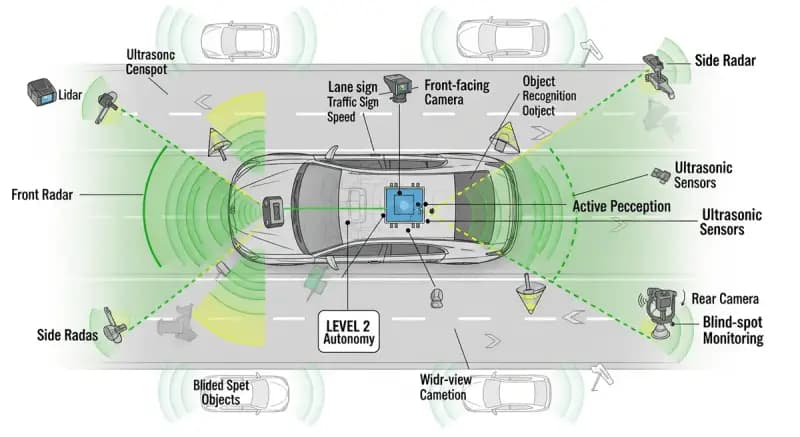
Level 2: Partial automation. Steering AND acceleration/braking are automated simultaneously under certain conditions. The driver must remain attentive and ready to intervene. Tesla Autopilot, Super Cruise, and most "highway assist" features are Level 2.
Level 3: Conditional automation. The vehicle handles all driving tasks in specific conditions; the driver can disengage but must respond to intervention requests. Only Mercedes Drive Pilot (in specific jurisdictions) currently offers true Level 3.
Related Reading
The Awkward Math of Selling a Car You Still Owe Money OnLevel 2 Limitations
Level 2 systems, despite marketing suggesting otherwise, require constant driver attention. They cannot:
, Navigate complex intersections
, Respond to emergency vehicles
, Handle construction zones reliably
, Interpret hand signals from traffic police
, Manage pedestrians crossing unpredictably
Related Reading
Tesla's Triumphant Entry into the Indian Automotive MarketIn India, where traffic behavior is highly informal, Level 2 limitations are particularly acute. Lane markings are inconsistent, two-wheelers weave unpredictably, and pedestrians cross anywhere. Systems trained on orderly Western traffic often fail in Indian conditions.
Safety Paradox
Research shows that partial automation can reduce safety by inducing driver complacency. Drivers overestimate system capability and underestimate their monitoring responsibility. Tesla crashes frequently involve drivers who were not paying attention despite Level 2 limitations.
Related Reading
The Ambassador Taxi: Urban Icon of a GenerationThe safest approach treats ADAS as assistant, not replacement. Use adaptive cruise for highway fatigue reduction. Engage lane centering on long expressway drives. But never trust the system to handle edge cases, it wasn't designed for them.
Indian Relevance
ADAS features designed for Western highways often misbehave on Indian roads. Lane departure warnings trigger constantly on unmarked roads. Automatic emergency braking activates falsely in dense traffic. Adaptive cruise struggles with cut-ins from two-wheelers.
Evaluate ADAS suitability for your actual driving environment, not theoretical capability.
Maintenance Implications
Technical understanding translates directly to maintenance strategy. Knowing how systems function helps owners prioritize servicing, recognize warning signs, and communicate effectively with service advisors. This knowledge pays dividends throughout the ownership period, often resulting in better vehicle condition and higher resale values.
Technical Considerations
Understanding these engineering principles helps owners make better maintenance decisions. When mechanics explain repairs, informed owners can evaluate recommendations critically. This knowledge prevents unnecessary work while ensuring critical maintenance isn't deferred. The goal isn't to become a mechanic but to be a smarter vehicle owner.
Real-World Applications
Theory translates to practice in specific ways. Under Indian driving conditions, with their unique combination of heat, dust, traffic, and road quality, these technical factors manifest differently than in laboratory conditions. Owners should calibrate expectations accordingly, recognizing that advertised specifications often assume ideal conditions.
The Nxcar team believes that every car lover should understand their machine. This article helps bridge that gap.