
Quick Summary: Engine compression is one of the first things a buyer's mechanic checks — and one of the last things most Indian sellers think about before listing. Worn piston rings, failing valve seals, and head gasket issues all show up as hard starting, rough idling, blue exhaust smoke, and excessive oil consumption. A basic compression test done before you list gives you control over the negotiation, the chance to fix problems in advance, and the documentation that builds buyer trust. Here is how to check it yourself, what the readings mean, and how to use the findings to sell smarter.
Most used car sellers in India spend time cleaning the car, touching up paint, and making sure the cabin looks presentable. Very few check what is happening inside the engine before a buyer's mechanic does.
That is a mistake — and it is an expensive one.
Engine compression is one of the first things a thorough pre-purchase inspection will flag. When a buyer's mechanic finds compression problems you did not know about, one of two things happens: the buyer walks away, or the price drops sharply in the final negotiation. Either way, you lose. Knowing your engine's compression health before you list gives you control over the conversation — and sometimes, the chance to fix something before it costs you.
What Engine Compression Actually Means
Every petrol or diesel engine works by compressing a fuel-air mixture inside each cylinder before igniting it. When the seals inside a cylinder weaken — from worn piston rings, damaged valves, or a failing head gasket — compression drops, and the engine starts showing it.In the Indian used car market, compression-related engine issues are among the most common reasons buyers pull back or negotiate hard at the last minute. A car that looked fine on the listing and drove reasonably on a short test drive can reveal serious issues the moment a mechanic puts a compression gauge on it. Sellers who are caught off guard lose negotiating ground instantly.
The good news: you can check this yourself before listing, with simple tools and a couple of hours.
The Warning Signs You Can Spot Without Any Tools
Your engine communicates compression problems clearly, if you know what to look for.Hard starting, especially when cold
If your car takes four to five seconds of cranking — or needs multiple attempts — before firing on a cold morning, that is often your first compression warning. Healthy engines start within one to two seconds. In Indian summers, this symptom can be less obvious because heat helps combustion. Test your cold starts on cooler mornings or after the car has sat overnight.
Rough idling and engine shake
Sit with the engine running at idle. Does it vibrate noticeably? Does the RPM needle hunt up and down instead of settling steadily? Low compression in one or more cylinders creates an imbalance — each cylinder fires with a different force, and the engine cannot maintain smooth rotation. You will feel it through the steering wheel and seat. On Indian cars like the Maruti Swift, Honda City, or Hyundai i20, a rough idle that was not present before is a clear signal worth investigating.
Power loss under load
If your car used to pull cleanly during overtaking on highways or on ghat sections, and now feels sluggish under the same conditions, compression wear is a likely cause. Compression-compromised engines struggle most under load — climbing flyovers in city traffic, pulling onto expressways, or carrying a full family on long trips. If the car feels tired where it used to feel responsive, do not ignore it.
Physical Signs That Point Directly to Compression Problems
Beyond feel and sound, compression issues leave visible evidence.Blue or grey smoke from the exhaust
Watch the exhaust on a cold start and during hard acceleration. Blue or grey smoke means oil is burning inside the combustion chamber — oil has leaked past worn piston rings or valve seals into the cylinder. White smoke points to coolant entering the combustion chamber — a head gasket problem. Black smoke indicates a fuelling issue, not compression. Blue-grey is the one to watch for.
Excessive oil consumption
Check your oil level weekly for a month before listing. A healthy engine uses roughly one litre per 5,000 km in an older car; significantly less in a newer one. If you are adding oil every 1,000 to 1,500 km without any visible leaks on the ground, the engine is burning it — a direct sign of compression wear.
Milky oil or unexplained coolant loss
Pull the dipstick and look at the oil. A milky, frothy appearance means coolant is mixing with oil — a classic head gasket failure symptom. Separately, check whether your coolant reservoir level is dropping without any visible external leak. Both point to combustion chamber seal failure, which directly affects compression.
How to Perform a Basic Compression Test
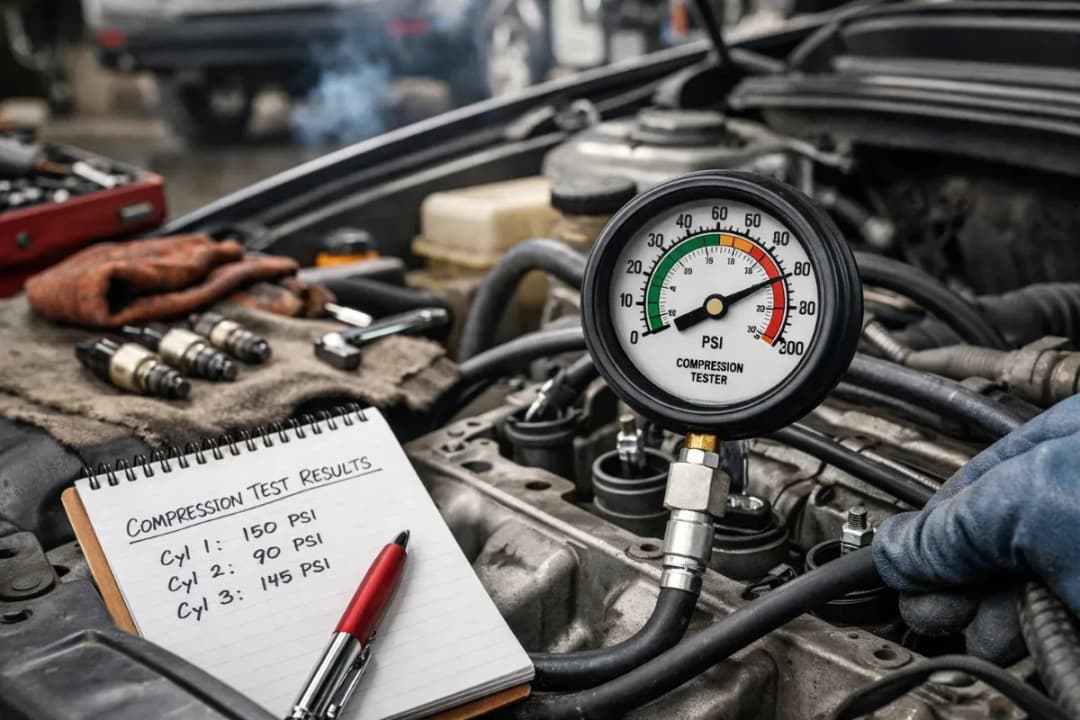
A compression tester is available at most auto accessory shops in India for roughly Rs 800 to Rs 2,500 for a basic screw-in type. It is a worthwhile investment before a major sale.Warm the engine for 10 to 15 minutes first — cold engine readings are unreliable. Disable the ignition by removing the fuel pump fuse or disconnecting the ignition coil. Remove all spark plugs. Screw the compression gauge into the first spark plug hole. Have someone crank the engine for four to five compression strokes and note the highest reading. Repeat for every cylinder.
Most Indian petrol engines — whether a 1.2-litre Maruti K-series, a 1.5-litre Honda i-DTEC diesel, or a 2.0-litre Hyundai petrol — should show readings between 125 and 175 PSI per cylinder depending on the engine specification. The more important number is consistency. Cylinders should not vary by more than 10 percent from each other. One cylinder reading 30 percent lower than the others is a problem even if it is above the minimum spec.
If one cylinder reads low, perform a wet compression test. Add a tablespoon of engine oil into that cylinder through the spark plug hole and retest. If the reading jumps up significantly, the problem is worn piston rings. If the reading stays low, the issue is likely a valve not sealing properly.
Reading the Spark Plugs
Remove the spark plugs and look at them carefully before reinstalling. They are one of the most informative physical clues about what is happening inside your engine.Healthy spark plugs on a well-maintained petrol engine show light tan or grey deposits — clean combustion. Problem indicators include:
- Wet, oily black deposits: oil is entering the cylinder past worn rings or valve seals
- White, crusty deposits: coolant contamination from head gasket failure
- One plug looking completely different from the others: a cylinder-specific problem worth flagging
Photograph all plugs together. If they are uniform, that is a positive signal for buyers. If one looks dramatically different, you know exactly which cylinder to investigate further.
What to Do With What You Find
If your compression readings are within spec and cylinders are consistent, document it. A one-page note with your test results, spark plug photos, and cold-start observations is a genuine sales asset.Most buyers in India never receive this level of documentation from a private seller. It builds immediate credibility and reduces negotiation pressure.
If you find compression issues, you have two honest paths. Fix them before listing — addressing worn piston rings or a failing valve seal at a trusted workshop can cost anywhere from Rs 15,000 to Rs 80,000 depending on the engine and the severity, but it allows you to list at a stronger price and sell with confidence. Or price the car accordingly and disclose what you found upfront. Buyers who know what they are buying — and are priced for it — are far less likely to create disputes after the sale than buyers who discover problems later and feel misled. Either path is better than not knowing.
FAQs
What are the most common signs of low engine compression in Indian driving conditions?
Hard cold starts, rough idling with noticeable engine shake, sluggishness under load, blue exhaust smoke, and higher-than-normal oil consumption are the most common signs. In Indian city driving with constant stop-go traffic, rough idling and power loss under load tend to surface first.
Can I perform a compression test myself before selling my car?
Yes. A basic compression tester is available at auto accessory shops for Rs 800 to Rs 2,500. The process involves warming the engine, removing spark plugs, screwing in the gauge, and cranking the engine cylinder by cylinder. No special mechanical training is required.
What compression reading is considered healthy for Indian petrol cars?
Most Indian petrol engines should show between 125 and 175 PSI per cylinder, varying by engine specification. More importantly, cylinders should not vary by more than 10 percent from each other. Look up your specific engine's manufacturer specification for an accurate benchmark.
Should I disclose compression problems to a buyer?
Yes, always. In India, post-sale disputes over hidden mechanical issues are common and can involve consumer complaint forums, RTO complaints, and legal proceedings. Honest disclosure with documented findings protects you legally and builds the buyer's trust enough to close the deal at a fair price.
What is the difference between a compression test and a wet compression test?
A standard compression test measures baseline cylinder pressure. A wet compression test adds a small amount of oil to a low-reading cylinder and retests. If pressure rises, the problem is worn piston rings. If pressure stays low, the issue is likely a valve not sealing. The wet test tells you what kind of repair is needed.