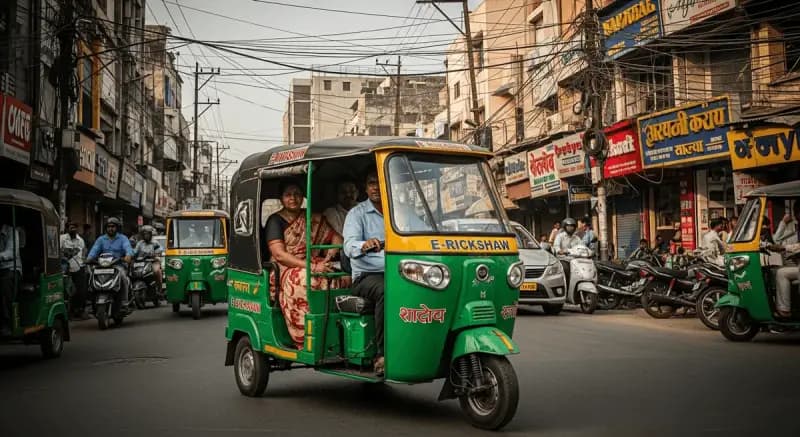
Everyone talks about Tesla and Tata Nexon when discussing India's electric future. But the real EV revolution is happening on three wheels...
The Invisible Transition
Walk through any Indian city and count the electric rickshaws. In Delhi alone, over 100,000 e-rickshaws operate daily, having completely displaced cycle rickshaws. This happened without government fanfare or subsidies.
The economics are compelling. An e-rickshaw costs Rs 1.5 lakh. It earns Rs 800-1000 daily. Operating costs are Rs 150/day including charging. Compare this to auto-rickshaws with Rs 400/day fuel costs.
Why Nobody Celebrates This
E-rickshaws don't fit the narrative of shiny technology and aspirational consumption. They're utilitarian, affordable, and serve the working class. They don't generate Instagram posts or investor excitement.
But they've electrified more kilometers than all passenger EVs combined. They've provided livelihoods for millions. They've reduced urban pollution measurably.
The Real Lesson
EV adoption doesn't require expensive batteries or fast charging. It requires products that make economic sense for users. The e-rickshaw proves this daily while we obsess over range anxiety in SUVs.
The lesson for the industry is clear: solve real problems for real people at real prices. The revolution will follow.
What Buyers Can Do
Empowered consumers are the best defense against questionable practices. Thorough research before entering a showroom, willingness to walk away from unfavorable deals, and sharing experiences with fellow buyers create accountability. Online forums and owner communities have become invaluable resources for cutting through marketing noise.
Industry Response
Some manufacturers recognize that customer dissatisfaction ultimately hurts their brands. Progressive companies are implementing stricter dealer oversight, transparent pricing, and customer feedback mechanisms. However, change is slow, and buyers should remain vigilant rather than assuming all players have reformed.
The Bigger Picture
These concerns aren't isolated incidents but symptoms of systemic issues in India's automotive retail landscape. The power imbalance between dealers and consumers, combined with information asymmetry, creates conditions ripe for exploitation. Understanding this context helps buyers protect themselves and push for better practices.
Practical Implications
Beyond the obvious frustrations, these issues have tangible financial consequences. Buyers who fall victim to these practices may find themselves underwater on their purchases within months. The hidden costs accumulate, from overpriced accessories to unnecessary add-ons, eroding the value proposition that initially attracted them to a particular vehicle.
This perspective comes from Nxcar , where we're not afraid to challenge conventional thinking about cars. Our love for automobiles includes honest conversations.