Introduction
The used car market has always been a vital component of the automotive industry, offering consumers alternatives to brand new vehicles. However, an interesting shift has been noted in 2026, with used car prices rising at a faster rate than those of new cars. What could possibly be driving this change? A mixture of influences seems to be at play, intertwining economic factors, supply chain dynamics, and changing consumer aspirations.
This development is gaining attention across the globe, especially in vibrant automotive markets like India, where car ownership experiences fluctuating trends. To understand why used car prices are on a steep rise, it is pivotal to delve into the numerous contributing factors, many of which have significant implications for potential buyers and the broader economy.
Supply Chain Disruptions
The global automotive industry is still feeling the reverberations of the unprecedented supply chain disruptions that started during the pandemic years. These disruptions caused shortages in critical components such as semiconductors, which brought about delayed production schedules for new cars.
Consequently, with manufacturers unable to deliver new cars in expected quantities or timelines, many consumers have turned to the used car market to meet their immediate needs. This surge in demand naturally causes prices of used vehicles to inflate, as supply struggles to keep pace with increasing interest.
Moreover, the transportation and logistics sectors continue to face challenges that further compound delivery issues. Shifts towards electric vehicles and new technology preferences in new cars also affect production timelines, indirectly bolstering the used car market.
Consumer Preferences and Changing Trends
Another significant factor influencing this scenario is the shift in consumer preferences. Many buyers are today more conscious of cost-effective purchases that hold value, such as lightly used cars, which still offer advanced features found in newer models.
Moreover, some consumers are now avoiding the initial depreciation hit typically associated with purchasing a brand new car. This trend is particularly strong in the Indian automotive landscape, where the rapidly developing middle class favours value for money as well as emerging environmental awareness.
Used cars are generally seen as providing better financial accessibility, enabling buyers to venture into segments that may have otherwise been beyond their budgets when considering brand new offerings. This is further enhanced by improved warranty offerings and certified pre-owned programs that add a layer of reliability and trust to used car purchases.
Economic Factors
Economic conditions can't be overlooked when analysing the rise in used car prices. Inflationary pressures have been affecting markets worldwide, diminishing the purchasing power of consumers. The expense tied to owning brand new cars now includes heightened maintenance and insurance costs, making used cars a more appealing proposition.
Additionally, financial institutions have become increasingly accommodating towards the used car segment. With more attractive financing options and lower interest rates available for used vehicles, the demand naturally increases, contributing to rising prices.
Furthermore, the depreciation curve often stabilises after the first few years of vehicle ownership, allowing used cars to maintain and even grow in value over time, a factor that can be appealing in uncertain economic times.
Related Reading
The Uncomfortable Truth About Indian Car Safety StandardsEnvironmental Considerations
Environmental concerns have become more pronounced in recent years, urging consumers and governments to reconsider their priorities concerning vehicle purchases. Used cars often represent a found option because they require no new materials to be produced, thereby reducing the carbon footprint compared to manufacturing new vehicles.
Governments worldwide, including India, are motivating eco-friendly behaviour. This encouragement is manifesting itself through incentives and policies that make using fewer resources a priority. The used car market benefits as consumers become more environmentally conscious, driving up demand and consequently prices.
Additionally, the growing acceptance of electric vehicles is still a relatively slow process given infrastructure challenges, reinforcing the appeal of used traditional combustion engine vehicles as an intermediary solution.
Market Dynamics and Inventory
The supply-demand dynamic naturally influences market pricing. The proportion of new vehicles entering the market has thinned due to the ongoing supply chain hiccups, alongside a reticence among owners to part with their current vehicles without guaranteed new replacements.
Dealership inventories, both for new and used cars, face unique challenges. The limited availability of new cars has compelled dealers to focus more vigorously on the used car market as their primary inventory, driving up prices further due to increased sales efforts and consumer interest.
There is also the aspect of the proliferation of online sales platforms which make it much easier to buy and sell used cars. The transparency and ease these platforms offer invite more participants into the used car market, further elevating demand.
Price and Variants
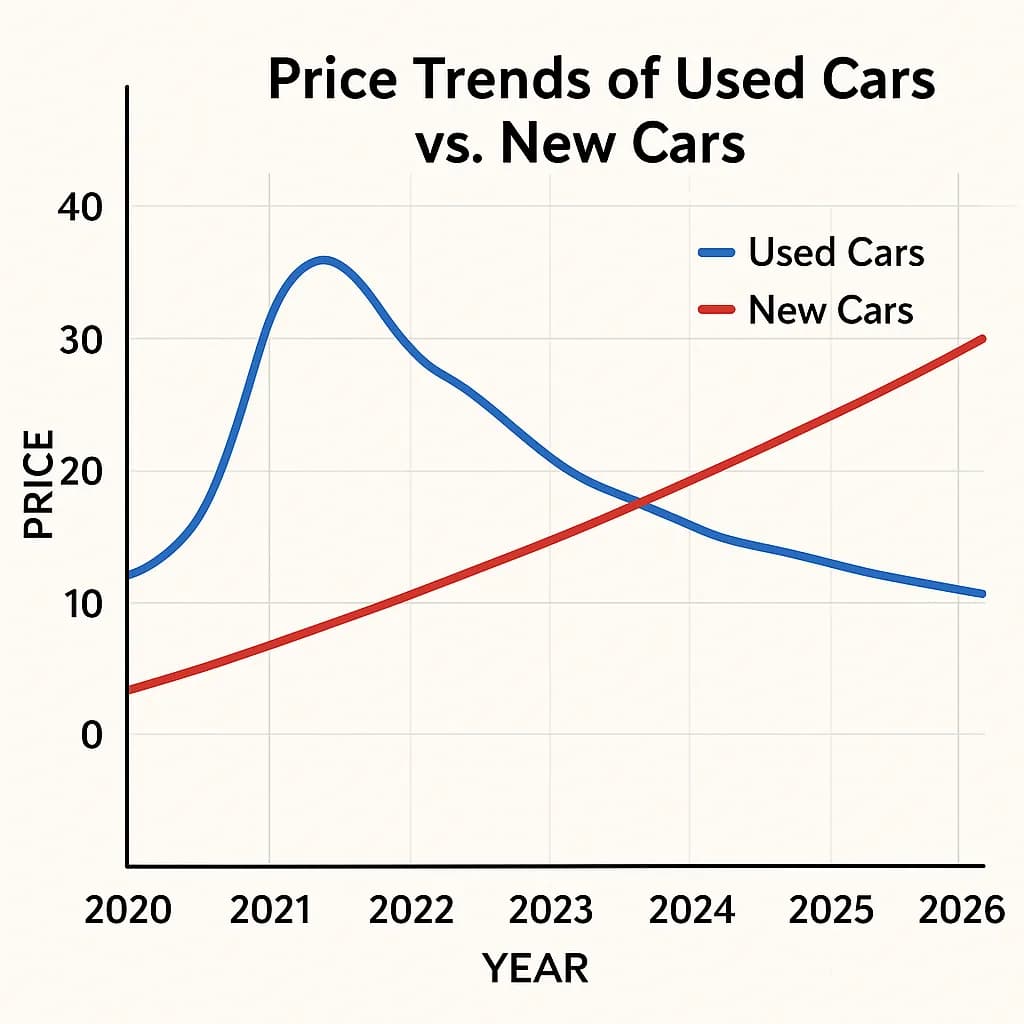
As always, pricing is pivotal in any automotive market analysis. In 2026, used cars have seen a price increase that outpaces new vehicles. Brands with strong resale value, such as Maruti Suzuki and Toyota, have witnessed particularly steep increments, whereas luxury vehicles also enjoy heightened demand due to aspirational Indian buyers who now see them within reach as used models.
The significant variety available in the used car market means that consumers have a broad spectrum of options at varying price points, from affordable hatchbacks to high-end, premium sedans and SUVs. This diversity is a major advantage, particularly in a dynamic market like India.
Consumers must weigh their options carefully, considering both the price differences and expectations regarding reliability, warranty offerings, and potential maintenance costs of used versus new vehicles.
Comparison with Competitors
When assessing used car prices in relation to new cars, comparisons with competitors are essential. Notably, new car models today often offer the latest technology and safety features, posing a challenge for older counterparts unless buyers are keen on very specific specifications or nostalgic appeal.
Looking to other markets also provides insights. In the US and Europe, used cars have displayed similar pricing trends, showcasing that this isn't just an isolated case. Global manufacturers often observe rising used vehicle sales and leverage this information to tailor local rollouts and strategies.
Each automotive giant's strategy influences resale values differently, reflecting how brand loyalty, perceived value, and competitor movements within the industry directly impact used car markets.
Pros and Cons
The obvious advantage of buying a used car is cost efficiency. With the lion's share of depreciation already taken by the first owner, buyers enjoy reduced prices and often find they can buy more car for their money.
Alternatively, warranties might be limited in scope compared to new cars. There is a potential risk of unforeseen maintenance, though certified pre-owned programs help mitigate some of these apprehensions by providing thorough checks and guarantees.
On the downside, buyers miss out on experiencing the latest automotive technology developments, as new cars tend to come equipped with cutting-edge features, including enhanced safety mechanisms and improved fuel efficiencies.
Should You Buy It / Final Verdict
Whether pursuing a used or new car in 2026, your decision must hinge on individual needs, financial considerations, and long-term travel plans. Enter the market with a clear assessment of your financial flexibility and ensure you take advantage of certified programs if you're opting for a pre-owned vehicle with added peace of mind.
In the vibrant Indian market, where economic conditions and cultural factors merge uniquely, this shift towards used vehicles appears to be both a savvy financial decision and a responsive choice to the evolving auto industry landscape.
Closing Paragraph
At Nxcar, we provide you with the latest insights and analyses of trends shaping the automotive industry. As 2026 progresses, our focus on market dynamics keeps you informed, helping you make educated decisions in your automotive journey.