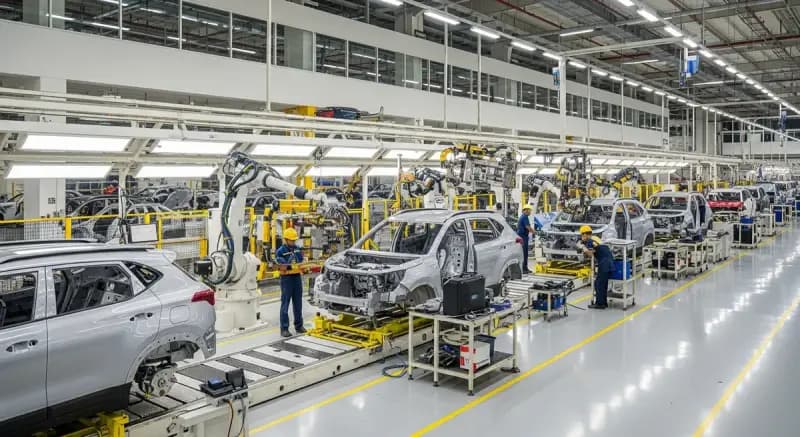
Korean automaker Kia has inaugurated its second manufacturing facility in India, with a combined investment of Rs 8,000 crore in Andhra Pradesh. The new plant will focus on electric vehicles and export production, positioning India as a global manufacturing hub for the brand.
The 300-acre facility in Anantapur district will have an annual production capacity of 300,000 units, supplementing the 300,000-unit capacity at Kia's existing Penukonda plant. Combined, Kia India will have the capability to produce 600,000 vehicles annually, making it one of the company's largest production bases globally.
Export Focus
Approximately 40% of production from the new facility will be earmarked for exports to Middle East, Africa, Latin America, and ASEAN markets. Kia currently exports the Seltos and Sonet from India but plans to add dedicated export-only models manufactured at the new plant.
"India offers the perfect combination of manufacturing capability, cost competitiveness, and free trade agreements," said Kia Corporation President Ho Sung Song. "This plant will serve as our primary production base for emerging markets."
Electric Vehicle Line
The new facility features a dedicated EV production line designed for Kia's E-GMP platform. The first India-made Kia EV, a compact SUV positioned below the imported EV6, will launch in late 2026 with a starting price around Rs 18 lakh.
Related Reading
Diesel Engine Technology: Understanding Common Rail SystemsThe plant also includes a battery pack assembly unit, though cells will initially be imported from Korea. Kia is in discussions with local partners for cell manufacturing by 2028.
Economic Impact
The investment will create approximately 5,000 direct jobs and an estimated 15,000 indirect jobs in the supplier ecosystem. Andhra Pradesh Chief Minister Chandrababu Naidu called it "the largest single foreign investment in the state's history."
Related Reading
Lifecycle Analysis of Lithium-Ion Battery Recycling: Environmental and Economic AssessmentKia has committed to achieving 80% local content by 2027, up from the current 65%, by developing the local supplier base.
Consumer Perspective
For Indian car buyers, these changes present both opportunities and considerations. Price-conscious consumers may find new value propositions emerging, while those focused on long-term ownership costs should factor in evolving technology and service networks. The market is becoming increasingly sophisticated, requiring buyers to make more informed decisions.
Regional Variations
The impact will vary across different Indian markets. Metropolitan areas with higher purchasing power may see accelerated adoption of new technologies and brands. Tier-2 and Tier-3 cities, which increasingly drive automotive sales growth, will likely follow different adoption curves based on infrastructure readiness and price sensitivity.
Looking Ahead
As the Indian automotive market matures, developments like these reshape the competitive landscape. The coming years will reveal which players successfully navigate these transitions and which struggle to adapt. Consumers ultimately benefit from increased competition and innovation, though the transition period may bring uncertainty for some segments.
From the Nxcar garage: We live and breathe cars. This story reflects our team's dedication to keeping you connected with India's automotive pulse.