
"Buy a Maruti, it has the best resale value." If I had a rupee for every time I've heard this advice, I could afford a Maruti. But here's the uncomfortable truth: obsessing over resale value is usually irrational, and following this advice often leads to worse decisions.
The Math Doesn't Support It
Let's compare: a Maruti Baleno at Rs 9 lakh retains 55% after 5 years = Rs 4.95 lakh. A Hyundai i20 at Rs 10 lakh retains 48% = Rs 4.8 lakh. The Maruti "advantage" is Rs 15,000 over 5 years, Rs 250/month.
If you prefer the i20's features, driving dynamics, or design, is Rs 250/month worth sacrificing your actual happiness with the car? You'll spend hundreds of hours in this vehicle. A marginally worse resale value is trivial compared to everyday driving satisfaction.
Related Reading
The Anticipated 2026 Renault Duster: An Evolution in ExcellenceNobody Holds Cars Long Enough
Resale value matters most for frequent changers, people who buy new and sell within 3-4 years. But this pattern of behavior is itself financially destructive. Every transaction involves depreciation hits, registration costs, insurance complications, and dealer margins.
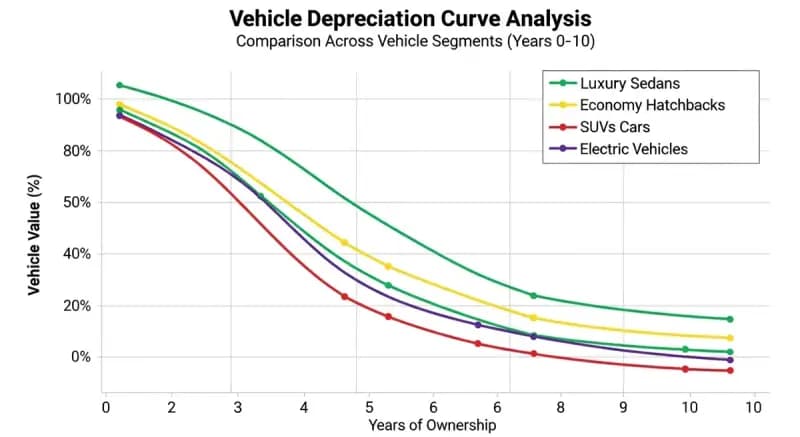
If you're optimizing for finances, keep your car 8-10 years until it depreciates to near-zero anyway. At that point, whether it retains 20% or 25% is irrelevant, the absolute difference is minimal.
Related Reading
Regenerative Braking: Efficiency Gains and LimitationsResale Reflects Past, Not Future
Current resale values reflect historical brand perceptions. Maruti's resale advantage comes from decades of reliability reputation and massive service network. But the industry is changing. EV transition will upend ICE resale values. New entrants are building competitive networks.
Buying for today's resale patterns assumes the future resembles the past. That assumption becomes less reliable every year.
Choose What You'll Enjoy
My radical advice: buy the car you actually want, take care of it, and drive it for as long as it serves your needs. Stop treating vehicles as investments to be optimized. They're consumption goods. Optimize for satisfaction, not for resale spreadsheets.
The Bigger Picture
These concerns aren't isolated incidents but symptoms of systemic issues in India's automotive retail landscape. The power imbalance between dealers and consumers, combined with information asymmetry, creates conditions ripe for exploitation. Understanding this context helps buyers protect themselves and push for better practices.
Practical Implications
Beyond the obvious frustrations, these issues have tangible financial consequences. Buyers who fall victim to these practices may find themselves underwater on their purchases within months. The hidden costs accumulate, from overpriced accessories to unnecessary add-ons, eroding the value proposition that initially attracted them to a particular vehicle.
Related Reading
Road Trip Movies: The Genre That Made Cars CharactersWhat Buyers Can Do
Empowered consumers are the best defense against questionable practices. Thorough research before entering a showroom, willingness to walk away from unfavorable deals, and sharing experiences with fellow buyers create accountability. Online forums and owner communities have become invaluable resources for cutting through marketing noise.
Industry Response
Some manufacturers recognize that customer dissatisfaction ultimately hurts their brands. Progressive companies are implementing stricter dealer oversight, transparent pricing, and customer feedback mechanisms. However, change is slow, and buyers should remain vigilant rather than assuming all players have reformed.
Curated by Nxcar , a team that loves cars enough to tell you what others won't. Knowledge is the best tool in any buyer's garage.