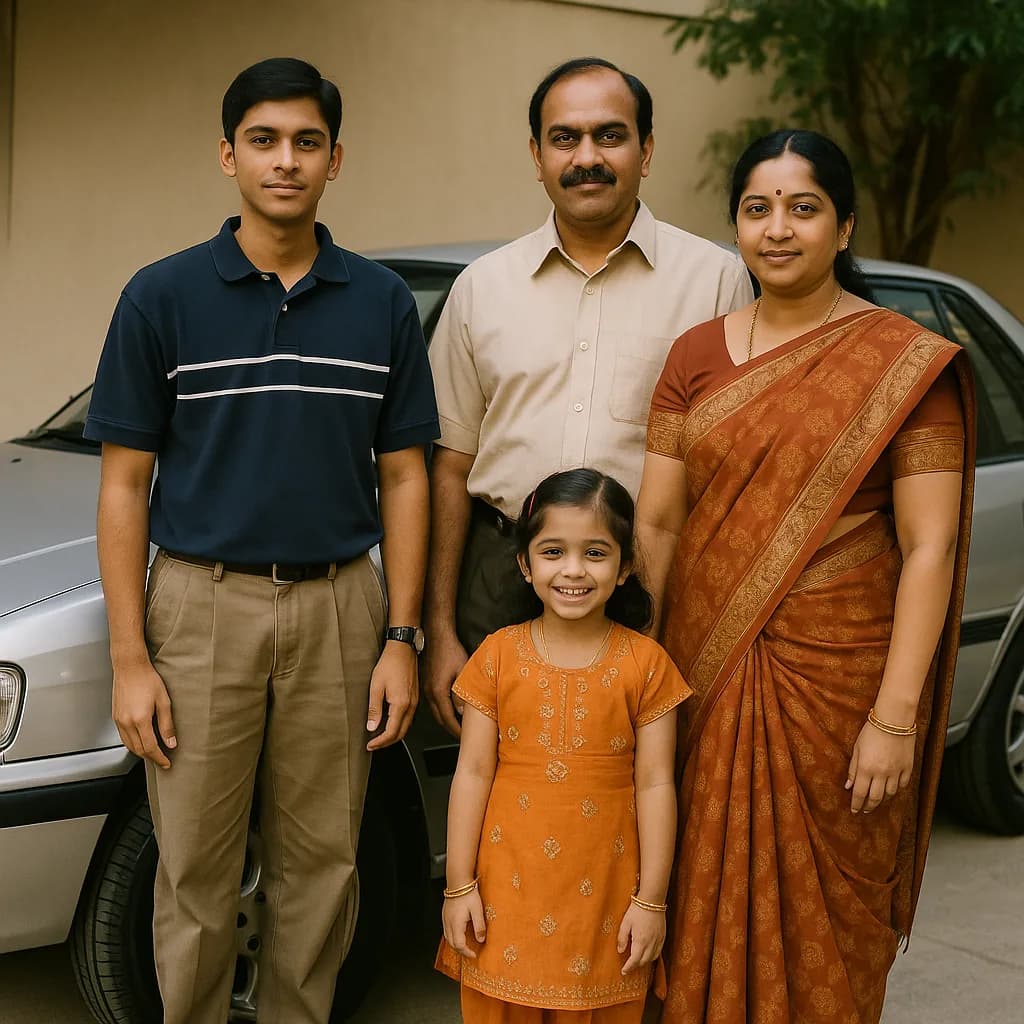

Buying a used car for the first time in India can feel overwhelming — the market is large, the terminology is unfamiliar, and the risk of making a costly mistake is real. This guide breaks the process into four clear steps so you can set a realistic budget, inspect cars with confidence, spot hidden problems before they become your problem, and complete the deal without regret.
At Nxcar, we have helped thousands of first-time buyers navigate the used car market with clarity and confidence. The reality is that many first-time buyers in India overpay, miss important mechanical issues, or end up with a car whose paperwork creates legal headaches — not because they were careless, but because nobody told them what to look for. This guide fixes that.
The difference between a great purchase and a financial mistake almost always comes down to preparation. Knowing what questions to ask, what documents to verify, and what a mechanic's report should cover puts you in control of a process that can otherwise feel like the seller holds all the cards.
Step 1: Research and Set Your Budget — The Foundation of a Smart Purchase
Before you look at a single listing, calculate your total monthly cost of ownership — not just an EMI. Include insurance, fuel, maintenance reserves, and registration transfer costs. Get pre-approved for financing from your bank or an NBFC before approaching any dealer or private seller, and identify 3–5 reliable models within your budget before you start searching.
The most common mistake first-time buyers in India make is focusing only on the asking price. The car you see listed at ₹5 lakh will cost significantly more than ₹5 lakh to own in the first year once insurance, registration transfer, immediate maintenance, and running costs are factored in. Buyers who calculate only the purchase price consistently underestimate their true annual ownership cost.
Calculate the Real Cost of Ownership
Your EMI is just the beginning. Before committing to any car, budget for the following:
-
Insurance: Get quotes before you buy, not after. A diesel SUV costs significantly more to insure than a petrol hatchback at the same purchase price. Comprehensive insurance on a ₹6 lakh used car in India typically runs ₹18,000–35,000 per year depending on the model, city, and IDV.
-
Maintenance reserve: Set aside ₹1,500–3,000 per month for routine servicing, tyre wear, and unexpected repairs. Higher-mileage cars and diesel engines typically sit at the upper end of this range.
-
Registration transfer: RTO transfer fees, Form 29/30 processing, and any re-registration costs if the car is from another state can add ₹3,000–15,000 depending on your state and the car's origin.
-
Immediate repairs: Even a car in good condition may need fresh tyres, a service, or minor repairs at purchase. Budget ₹10,000–30,000 for this unless the inspection confirms no immediate work is needed.
A useful rule of thumb for first-time buyers: keep total monthly transportation costs — EMI, insurance, fuel, and maintenance — under 20% of your monthly take-home income. If the car you want pushes you past this threshold, look at the next segment down.
Arrange Financing Before You Shop
Walking into a dealership or meeting a private seller with financing already arranged changes the dynamic entirely. You become a buyer who knows their budget and cannot be manipulated by financing conversations.
Approach your bank or a credit union first. Banks that already hold your salary account often offer preferential rates for existing customers. NBFCs like Bajaj Finserv, Mahindra Finance, and HDB Financial Services also provide used car loans, but compare rates carefully — processing fees and interest rates vary significantly between lenders.
Check your CIBIL score before applying. A score above 700 qualifies for the best available rates. Below 650, lenders either decline or charge meaningfully higher interest. Knowing your score before you apply avoids surprises and lets you correct any errors on your report in advance.
Identify Reliable Models Within Your Budget
Not all used cars represent equal value at the same price. Some models are known for long-term reliability and affordable parts; others have expensive maintenance cycles or known failure patterns in specific variants or years.
Reliable choices at different budget levels in the Indian used car market:
-
Under ₹4 lakh: Maruti Suzuki Swift (2014–2017), Maruti Alto K10, Hyundai i10 (2013–2016). These have widely available parts, affordable service costs, and strong mechanic familiarity across India.
-
₹4–7 lakh: Maruti Suzuki Dzire (2017–2019), Honda Amaze (2018–2020), Hyundai i20 (2015–2018), Tata Tiago. Proven engines, wide service network, reasonable insurance costs.
-
₹7–12 lakh: Honda City (2017–2020), Hyundai Verna (2017–2019), Maruti Ciaz, Hyundai Creta (2018–2019). Mid-size segment with good resale value and established reliability records.
-
₹12–20 lakh: Toyota Innova Crysta (2016–2019), Hyundai Creta (2020–2022), Kia Seltos (2020–2021). Premium used segment — higher repair costs but strong build quality and long service life if maintained.
Research ownership forums and long-term owner communities for any model you are seriously considering. Indian car owner forums on Team-BHP, Nxcar and similar communities are among the best sources of real-world reliability data — far more useful than promotional material.
Step 2: Inspect the Vehicle Thoroughly — What Most First-Time Buyers Miss
A proper used car inspection means checking the exterior and interior across 20+ specific points, verifying the car's history through the Vahan portal and RC book, confirming chassis and engine number matches, and systematically testing every electronic feature before forming any opinion on price.
This is where first-time buyers most commonly lose money. A car that looks clean, smells fresh, and has a pleasant interior can still have a damaged chassis, a worn clutch, or an airbag system that has been deployed and poorly replaced. Falling in love with a car's presentation before completing a thorough inspection is the most reliable route to post-purchase regret.
Related Reading
India's Highway Expansion: 12,000 km of New Roads by 2026Exterior and Interior Condition Checklist
Inspect the car in daylight — not in a covered showroom, not in the evening. Natural light reveals paint inconsistencies that indoor lighting conceals.
Walk around the entire car and check:
-
Panel gaps: The gaps between doors, bonnet, boot lid, and surrounding panels should be consistent and even all the way around. Uneven or varying gaps indicate panel removal and refitting after an accident repair.
-
Paint consistency: Walk slowly and look at each panel. A different shade or sheen on one door compared to the surrounding panels is a reliable sign of repainting after damage.
-
Rust: Check wheel arches, door sills, and the underbody. Surface rust on a 10-year-old car is manageable. Structural rust on the floor pan or chassis rails is a deal-breaker.
-
Tyre wear: Uneven wear — more on one side than the other, or cupping patterns — indicates alignment issues, suspension problems, or previous chassis damage.
-
Windshield: Chips or cracks that are in the driver's line of sight are a legal and safety issue. Windshield replacement on a mid-size car costs ₹6,000–18,000 depending on the model.
Inside the cabin, pull back the floor mats and check for dampness, water staining, or musty odours. These indicate water ingress — either from a leaking seal, a blocked sunroof drain, or flood exposure. Flood-damaged cars have pervasive electrical issues that surface weeks or months after purchase.
RC Verification and Vehicle History
The RC book is the most important document in any Indian used car transaction. Verify the following before anything else:
-
The chassis number and engine number on the RC match what is physically stamped on the car. Check the chassis plate (usually on the firewall or driver's door sill) and the engine number physically — do not rely on the seller's verbal confirmation.
-
The number of previous owners. Multiple ownership transfers in a short period suggest a recurring problem being passed from buyer to buyer.
-
Whether a bank or NBFC is listed under hypothecation. If so, an NOC from the lender is mandatory before legal transfer of ownership to you.
-
The registration state. A car registered in another state may involve re-registration costs and road tax implications in your home state.
Cross-check all RC details on the Vahan portal (vahan.parivahan.gov.in) independently using the registration number. This free government service shows registered owner details, fitness status, and any hypothecation on record — and takes five minutes to check.
Test Every Feature and Electronic System
Electronic failures in used cars are common and expensive. Systematically test every system before forming any view on the car:
| System | What to Test | Red Flags to Watch For |
|---|---|---|
| Air Conditioning | Run on maximum for 5 minutes — should be cold within 2–3 minutes | Weak cooling, burning smell, compressor noise (₹12,000–35,000 repair) |
| Infotainment | All sources, Bluetooth pairing, backup camera if fitted | Frozen screens, dead pixels, no audio (₹8,000–25,000 replacement) |
| All Lights | Headlights, fog lights, indicators, brake lights, reversing lights | Multiple failures suggest electrical system neglect |
| Power Windows and Locks | All four windows, all door locks | Slow or grinding operation (motor failure imminent) |
| Airbag Warning Light | Should extinguish within 3–5 seconds of starting engine | Stays on — means fault in airbag system, possibly deployed and improperly replaced |
| ABS and Traction Control | Warning lights should clear after startup | Lights staying on indicate sensor or system fault |
Any dashboard warning light that stays on after the initial self-check must be investigated with an OBD-II scan before you proceed. Some sellers clear fault codes before showing the car — the light will be off, but the underlying fault remains and the code will return within a few drive cycles.
Step 3: Take a Comprehensive Test Drive — Beyond a Quick Loop
A proper test drive lasts at least 20–30 minutes and covers city traffic, an open road or highway stretch, rough surfaces, and low-speed manoeuvring. It should start from cold, with the radio off, so you can hear everything the car is telling you.
A five-minute drive around the block is not a test drive. It is a formality that reveals almost nothing. Many mechanical issues — transmission hesitation, suspension clunking, brake pulsation, high-speed vibration — only appear under specific conditions that a short loop cannot replicate.
Plan Your Route Before You Go
Map out a route in advance that covers:
-
City streets with stop-and-go traffic: Tests the clutch, gear changes, low-speed steering, and suspension behaviour over typical Indian road surfaces and speed breakers.
-
An open road or highway stretch: Accelerate to 80–100 km/h. The car should pull cleanly. Any vibration at highway speed points to tyre balancing, wheel alignment, or driveshaft issues.
-
Rough or uneven road: Listen for clunking or rattling from the suspension. This reveals worn shock absorbers, ball joints, or bushings that a smooth road hides entirely.
-
A parking lot for tight turns: Low-speed full-lock turns expose CV joint issues — a clicking sound under these conditions is a clear sign of worn CV joints.
Start the test drive from a cold engine. Many issues — rough idling, exhaust smoke, coolant smells — only appear before the engine reaches operating temperature. A seller who has been "warming up" the car before you arrive may be masking a cold-start problem.
What to Listen and Feel For
Turn off the radio. Roll down the windows on rough roads. You are listening for information.
Related Reading
The Best Car for a Ladakh Trip: Adventure On Wheels-
Grinding or squealing when braking: Worn brake pads or warped discs. Brake pad replacement costs ₹1,500–5,500 per axle depending on the model. Disc replacement adds ₹3,500–15,000 per axle.
-
Clunking over bumps: Worn suspension components — shock absorbers, ball joints, or control arm bushings. A full suspension overhaul on an Innova Crysta can cross ₹50,000.
-
Whining or humming that changes with vehicle speed: Wheel bearing wear. Replacement costs ₹3,000–8,000 per wheel on most Indian cars.
-
Clicking during tight turns: CV joint damage. Replacement costs ₹4,000–12,000 per side including labour.
-
Knocking from the engine: Potentially serious internal damage. Do not proceed without a full mechanic inspection if you hear this.
Evaluate Brakes and Steering
In a safe, empty stretch, apply the brakes firmly from 60 km/h. The car should stop in a straight line without pulling to either side. A car that pulls under hard braking has a braking imbalance that is both a safety issue and a negotiation point.
A pulsating brake pedal under firm braking indicates warped discs. A soft or spongy pedal suggests air in the brake lines or worn components. Either needs attention before the car is safe to drive regularly.
Test the steering through slow tight turns and at highway speeds. It should feel responsive, consistent, and return to centre naturally. Excessive free play, vibration through the wheel, or the car wandering on a straight road all indicate worn steering components.
Assess Comfort for Your Daily Use
You will spend a significant amount of time in this car. Comfort and visibility matter and should be evaluated honestly, not dismissed because everything else looks good.
Can you find a comfortable seating position with the seat and steering adjusted correctly for your height? Are the pedals well-positioned? Can you reach all controls without stretching or leaning?
Check visibility: are the A-pillars (the front windshield posts) creating blind spots at junctions? Can you see clearly out the rear window? Do the mirrors provide adequate coverage?
If something feels wrong during the test drive, trust that instinct. It will feel the same way every day you own the car.
Step 4: Negotiate and Complete the Purchase — Protecting Your Investment
Before finalising any used car purchase in India, commission an independent pre-purchase inspection, use the findings to negotiate on specific documented costs, verify every document including the RC, NOC if applicable, and Form 29/30, and ensure insurance is transferred to your name before driving the car away.
The Pre-Purchase Inspection Is Your Best ₹2,000–4,000 Spent
Never skip the independent mechanic inspection. This is your last line of defence against hidden problems, and it costs a fraction of what a missed fault will cost you after purchase.
Choose your own mechanic or inspection service — not one suggested by the seller. A thorough inspection should include:
-
Underbody inspection on a lift — chassis rails, floor pan, exhaust, and suspension mounts
-
Engine compression check on high-mileage units
-
All fluid condition checks and leak inspection
-
Brake pad and disc measurement
-
OBD-II diagnostic scan covering engine, transmission, and airbag system fault codes
-
Paint thickness measurement to identify repaired panels
-
Road test by the mechanic under normal driving conditions
Request a written report with findings and, where possible, photographs of problem areas. This report is your negotiation document.
A seller who refuses to allow an independent inspection has something to hide. Walk away without hesitation.
Use Inspection Findings to Negotiate Effectively
Every item in the inspection report that requires money to fix is a legitimate reason to reduce your offer. Prioritise issues by severity:
-
Safety-critical items: Worn brakes, failing suspension components, tyre condition, steering issues. These are non-negotiable — either the seller fixes them before handover, or the full repair cost comes off the price.
-
Major mechanical items: Engine or transmission faults, clutch near end of life, failing cooling system. Negotiate heavily on these or walk away if the seller will not move.
-
Serviceable items: Overdue service, aging belts, minor fluid seeps. Reasonable negotiation points that most sellers will accommodate.
-
Cosmetic items: Scratches, minor dents, interior wear. Minor leverage — useful for rounding down a price but not the foundation of a serious negotiation.
Present your findings calmly and factually. "The mechanic found the front brake pads are at 15% and both front shock absorbers are leaking. That is approximately ₹12,000 in immediate repairs. I would like you to either address these before handover or reduce the price by ₹12,000." Most sellers will negotiate rather than lose a buyer who has clearly done their homework.
Know your walk-away point before the negotiation begins and hold to it. If the inspection reveals major problems the seller will not price in, a different car is the right outcome.
Review All Paperwork Before Any Payment
Read every document thoroughly before signing anything. This is not the time to rush because the seller is waiting.
Essential documents you must receive or verify:
-
Original RC book — in the seller's name, with chassis and engine numbers you have already verified physically.
-
NOC from lender — mandatory if hypothecation appears on the RC. Without this, ownership cannot legally transfer to you.
-
Form 29 and Form 30 — signed by the seller, required for RTO ownership transfer.
-
Valid insurance copy — confirm the coverage dates and that the policy is active.
-
All spare keys — a missing second key costs ₹3,000–12,000 to replace depending on the model.
-
Service history booklet — from authorised service centres where available.
-
Written sale agreement — stating the agreed price, vehicle details (registration number, chassis number, engine number, odometer reading), date of sale, and signatures from both parties.
Red flags in documentation: the RC is not in the seller's name, a lienholder is listed but no NOC is available, there are unexplained alterations or corrections in the RC, or the seller creates urgency to sign before you have read everything. Any of these is a reason to pause or walk away.
Understand What Warranty Coverage You Have
Most private used car sales in India are sold as-is — you own all problems the moment you drive away. This is why the pre-purchase inspection matters so much in private transactions.
Dealer sales may include limited warranty coverage depending on whether the car is sold under an authorised CPO programme or an independent dealer's own limited warranty. Understand exactly what is covered before you factor warranty value into the price you are paying.
| Warranty Type | Coverage | Typical Cost | Useful For |
|---|---|---|---|
| Manufacturer CPO (e.g. Maruti True Value, Hyundai H Promise) | Comprehensive, manufacturer-backed, typically 1 year | Included in CPO price premium | Buyers who want documented assurance and recourse |
| Independent Dealer Warranty | Varies widely — read terms carefully | ₹5,000–20,000 | Only useful if terms are clearly written and the dealer is established |
| As-Is (Private Sale) | None — all repairs are yours immediately | ₹0 | Acceptable for reliable, well-inspected models where you have a clear repair budget |
If a dealer offers an extended warranty as an add-on, read the exclusions carefully before paying. What is excluded from coverage is often more important than what is included — many such products exclude common failure points like electronics, turbochargers, and air conditioning compressors.
Complete the Transfer and Insurance Immediately
Initiate the RC ownership transfer at your regional RTO within 30 days of purchase. Until the transfer is complete, the previous owner remains the registered owner and is technically liable for anything that happens involving the vehicle. This creates risk for both parties — complete it promptly.
Transfer insurance to your name before driving the car away from the handover point. Most Indian insurers allow policy transfer or a fresh policy issuance on the same day by phone or app. Driving an uninsured vehicle, even briefly, is both illegal and a significant financial exposure.
Buying a Used Car Without Regret: Your Step-by-Step Action Plan
Step 1: Set your total budget. Calculate what you can afford monthly including EMI, insurance, fuel, and maintenance. Get pre-approved for financing from your bank or NBFC. Identify 3–5 reliable models within your price range based on ownership community reviews and known reliability records.
Step 2: Research and locate candidates. Search Nxcar, for your target models in your city. Check authorised CPO programmes for the same models. Run the registration number of any serious candidate on the Vahan portal before making the trip to view it.
Step 3: Inspect thoroughly in person. View cars in daylight. Check all panel gaps, paint consistency, and underbody condition. Verify RC details physically. Test every electronic feature. Take a comprehensive test drive of at least 20 minutes on varied roads.
Step 4: Commission a professional inspection. Arrange an independent mechanic's inspection for every car you are seriously considering. Review the written report and cost-estimate every finding before discussing price.
Step 5: Negotiate using documented evidence. Present your offer with the inspection report, comparable listings, and specific repair cost estimates as your factual basis. Review all paperwork completely before signing. Verify the RC, NOC if applicable, Form 29/30, and sale agreement. Complete insurance transfer and initiate RTO ownership transfer within 30 days.
Related Reading
Cars That Defined Indian Families in the 2000sConclusion
Buying your first used car does not have to feel like a gamble when you follow a systematic process.
Set a realistic budget that includes all ownership costs — not just the sticker price. Verify the car's history through the RC and Vahan portal before you fall in love with how it looks. Inspect thoroughly in daylight and drive it properly across varied conditions. Commission an independent mechanic's inspection before any negotiation. And complete the paperwork — RC transfer, NOC, insurance — before the car leaves your sight.
The right used car at the right price is available in every Indian city. The buyers who find it consistently are the ones who treat the process as a series of verifiable steps rather than a trust exercise with a stranger. Take your time, use professionals when you need them, and walk away from any deal that feels rushed or pressured. The car will still be there tomorrow — and if it is not, another one just as good will come along.
Start your search with Nxcar for verified inventory, transparent pricing, and inspection-backed listings that take much of the guesswork out of the process.
About Nxcar
Nxcar is a leading automotive marketplace specialising in connecting first-time buyers with quality used cars across India. With verified vehicle histories, transparent pricing, and expert guidance at every stage, Nxcar ensures every buyer drives away with confidence in what they have purchased and the price they paid.
FAQs
What is the first thing I should do before looking at used cars in India?
Set a realistic total budget before you open a single listing. This means calculating not just what you can pay for the car but what you can afford monthly in EMI, insurance, fuel, and maintenance combined. Then get pre-approved for financing from your bank so you know your exact ceiling before any seller conversation begins.
Should I buy from a dealer or a private seller?
Both are valid depending on your priorities and risk tolerance. Authorised CPO dealers offer documented history, limited warranty coverage, and accountability if something is misrepresented — at a price premium of 10–18% over private sellers. Private sellers offer lower prices but no warranty or recourse after the transaction. Your mechanic inspection becomes even more critical in private transactions.
How do I know if the price being asked is fair?
Check the asking price against at least two Indian valuation platforms — Nxcar and other all provide city-specific estimates based on year, variant, and mileage. Compare with active listings for the same variant currently available in your city. A fair price typically sits within 5–10% of what comparable cars are actually transacting at locally.
What should I focus on during a test drive?
Drive for at least 20 minutes on varied roads — city traffic, an open stretch at 80–100 km/h, and rough surfaces. Radio off. Listen for grinding from brakes, clunking from suspension, clicking during tight turns, and any hesitation in acceleration or gear changes. Test firm braking in a safe area and verify the car stops straight. Everything that bothers you on the test drive will bother you every day you own the car.
Is an independent mechanic inspection really necessary?
Yes, without exception. An independent inspection costs ₹1,500–4,000 and can identify faults that would cost ₹30,000–1,50,000 to repair after purchase. It also gives you a documented, factual basis for negotiating the price down if issues are found. Any seller who refuses to allow an independent inspection has something to hide.
What is a vehicle history check and how do I do it in India?
In India, the primary history check is through the Vahan portal (vahan.parivahan.gov.in) using the car's registration number. This shows the registered owner, registration date, fitness status, and any hypothecation (outstanding finance). Cross-check this against the physical RC book to confirm all details match. The chassis and engine numbers on the RC must match what is stamped on the car itself.
Can I negotiate even if the price seems reasonable?
Yes, and you should. Negotiation is expected in used car transactions in India. Use the inspection report, comparable listings at lower prices, and any maintenance or repair items the car needs as your basis. A factual, documented case is far more effective than a general request for a lower price. Even on a fairly priced car, most sellers have 5–10% of room they will not volunteer unless asked.
What paperwork do I need to complete a used car purchase in India?
You need the original RC book, Form 29 and Form 30 signed by the seller, an NOC from any lender listed under hypothecation, valid insurance, all spare keys, and a written sale agreement stating the price, vehicle details, and odometer reading. Initiate the RTO ownership transfer within 30 days of purchase and transfer insurance to your name before driving the car away.