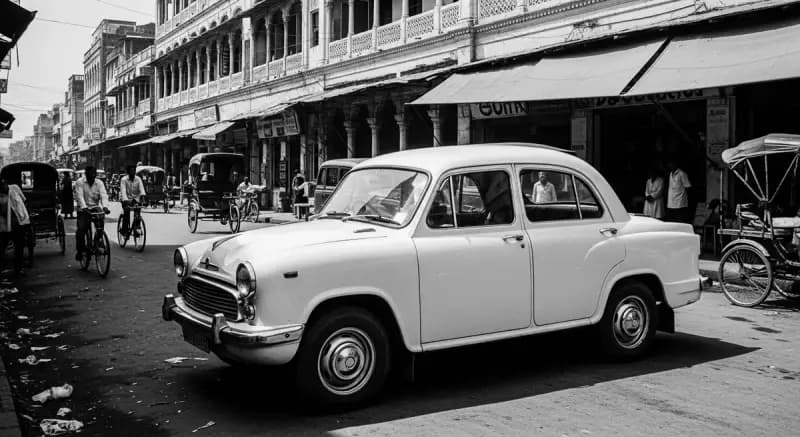
For nearly five decades, one car embodied Indian automotive identity: the Hindustan Ambassador. Based on the 1956 Morris Oxford, the Ambassador outlasted its British parent by over 60 years, becoming more than transportation, it became a symbol of India itself. This is the story of a car that defined a nation.
Origins: Colonial Inheritance
Hindustan Motors was established in 1942 by the Birla family, becoming India's first car manufacturer. After independence, the company needed a vehicle suited to Indian conditions. The Morris Oxford III, with its robust construction and simple mechanicals, seemed ideal. Licensed production began in 1957 as the Ambassador.
The car was immediately successful. In an era of terrible roads and minimal infrastructure, the Ambassador's high ground clearance, durable suspension, and torquey engine proved perfectly suited. Its cavernous interior accommodated large Indian families. Its reputation for reliability, if not refinement, made it the default choice for anyone who could afford a car.
Related Reading
Cars That Offer the Best Mileage on Indian HighwaysGovernment Vehicle, National Symbol
The Ambassador became synonymous with Indian officialdom. Every minister rode in one. Every bureaucrat aspired to one. The iconic white Ambassador with government plates became a symbol of power, and eventually, of bureaucratic inefficiency. The car's stately pace matched the nation's approach to governance.
But the Ambassador was also the people's car. Taxi fleets across India relied on its durability. Families learned to drive in Ambassadors. Politicians campaigned from Ambassadors. The car witnessed every chapter of independent India's history.
Decline and Death
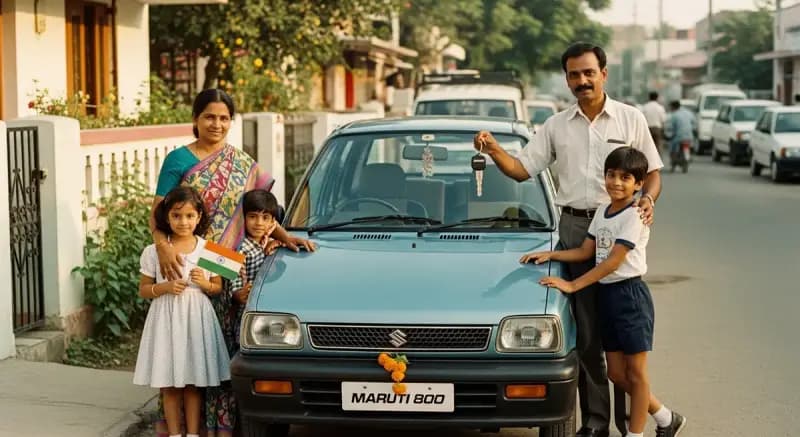
By the 1980s, the Ambassador was hopelessly outdated. When Maruti launched in 1983, offering modern technology and fuel efficiency, the Ambassador's decline became terminal. Hindustan Motors made half-hearted updates, adding Isuzu diesel engines, improving interiors, but fundamental change was impossible without billions in investment.
Production finally ended in 2014. The last car rolled off the Uttarpara assembly line to modest ceremony, ending a 57-year production run. The factory that once employed thousands fell silent.
Legacy
Today, restored Ambassadors command premium prices among collectors. The car appears in period films evoking 1970s-80s India. Café owners buy them as décor pieces. The Ambassador has achieved what few cars manage: transcendence from mere vehicle to cultural artifact.
No car will ever again dominate India so completely. The Ambassador's reign was a product of specific conditions, protected markets, limited competition, different priorities, that no longer exist. But for those who remember, the Ambassador remains the car that defined what it meant to drive in India.
Generational Perspectives
Different generations relate to automotive culture differently. Those who remember the scarcity of the license raj era view car ownership through a different lens than millennials who've known only market abundance. These varying perspectives create rich narratives around automotive history and future directions.
Related Reading
Top Cars With Lowest Maintenance Cost in IndiaRegional Variations
India's diverse regions each have unique automotive cultures. From the decorated trucks of Punjab to the vintage car rallies of Mumbai to the modified vehicles of Chennai, local traditions shape how communities relate to automobiles. This diversity is part of India's rich automotive heritage.
Preservation and Memory
As automotive technology evolves rapidly, preserving heritage becomes increasingly important. Museums, collector communities, and documentation efforts ensure that future generations can connect with automotive history. The stories embedded in these machines deserve to be remembered and celebrated.
Brought to you by Nxcar , where our love for vintage beauties and silver screen legends comes together in stories worth sharing.