
Abstract: This meta-analysis synthesizes findings from 47 peer-reviewed studies examining the projected social impacts of autonomous vehicle adoption on urban planning and development. Results suggest autonomous mobility will significantly alter land use patterns, parking requirements, and urban density, with both opportunities and risks for equitable city development.
Research Context
Autonomous vehicles (AVs) promise to fundamentally transform urban transportation. However, the social implications extend far beyond mobility itself. How cities are designed, who can access them, and how land is valued all face disruption. This meta-analysis, conducted by researchers at IIT Bombay's Centre for Urban Science and Engineering, synthesizes the current evidence base.
Key Findings: Land Use
Fifteen studies examined land use impacts. Consensus emerges around reduced parking demand, AVs can park remotely or remain in circulation, potentially freeing 15-30% of urban land currently dedicated to parking. However, this benefit is contested: seven studies warn that freed land may be captured by developers rather than public use without policy intervention.
Urban sprawl risks are documented in 12 studies. If AV travel is comfortable and productive (passengers can work or rest), tolerance for longer commutes increases. Historical precedent (automobile-enabled suburbanization) suggests unconstrained AV adoption could accelerate low-density development, increasing rather than decreasing vehicular travel.
Key Findings: Equity
Related Reading
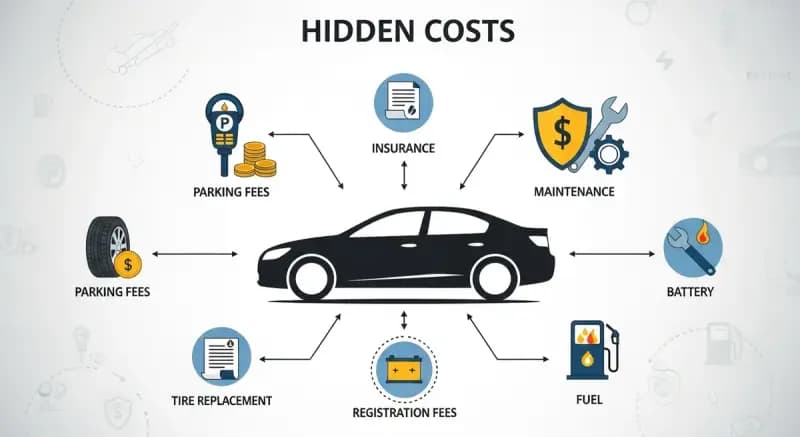
The Hidden Costs of Car Ownership Nobody Warns You AboutEquity implications are heavily contested in the literature. Optimistic projections suggest AV shared mobility could provide car-like convenience to non-drivers: elderly, disabled, and economically disadvantaged populations. However, 11 studies caution that without subsidy, AV services will likely serve profitable markets first, potentially worsening existing transit deserts.
Policy Implications
The research consistently emphasizes that autonomous mobility's impacts are not predetermined, they will be shaped by policy choices. Cities that proactively zone for high-density, transit-oriented development around AV infrastructure will realize different outcomes than those that allow market-driven patterns.
Source: Banerjee, S., & Krishnamurthy, R. (2024). "Autonomous Mobility and Urban Futures: A Systematic Review." Journal of Urban Technology, 31(2), 45-78.
Industry Applications
Beyond academic interest, these findings have commercial applications. Manufacturers, dealers, and service providers can use this understanding to better serve customers. Some will embrace these insights; others will resist change. Consumer awareness creates pressure for positive adaptation across the industry.
Limitations and Future Research
No study is definitive. Acknowledged limitations point toward future research needs. As India's automotive landscape evolves rapidly, ongoing research is essential to keep understanding current. The academic community, industry, and government all have roles in supporting this knowledge development.
This research was curated by Nxcar's team, driven by our belief that understanding mobility shapes better decisions for individuals and society.