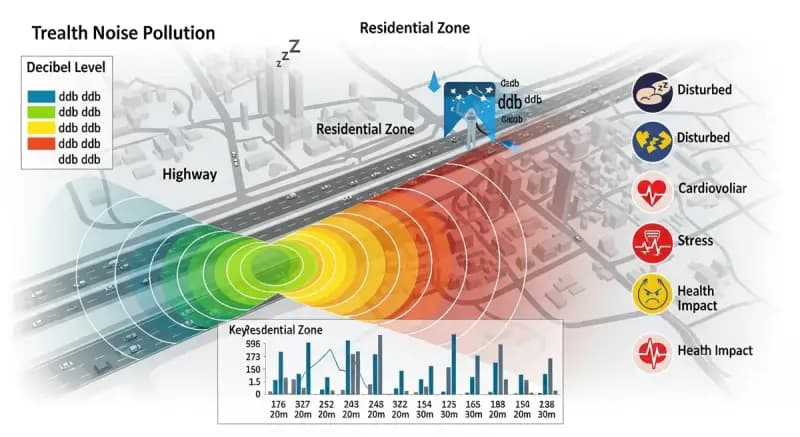
Abstract: This epidemiological study correlates traffic noise exposure levels with health outcomes across 12 Indian cities. Analysis of 45,000 subjects over 5 years reveals significant associations between chronic noise exposure and cardiovascular, sleep, and mental health outcomes.
Exposure Assessment
Residential noise exposure estimated using GIS-based traffic flow modeling validated against 500 monitoring points. Subjects categorized by exposure quartiles: <55 dB, 55-65 dB, 65-75 dB, >75 dB (24-hour average).
Health Outcomes
Cardiovascular outcomes: highest exposure quartile showed 23% elevated risk of hypertension (OR=1.23, 95% CI: 1.12-1.35) versus lowest quartile after controlling for socioeconomic and behavioral factors.
Sleep disturbance: dose-response relationship identified. Each 10 dB increase associated with 15% increased probability of chronic sleep issues.
Mental health: chronic noise exposure correlated with elevated anxiety and depression scores, though causality is difficult to establish given confounders.
Vehicle-Type Contributions
Heavy vehicles contribute disproportionately to noise exposure. Truck restrictions during night hours showed measurable health benefits in affected populations. Two-wheeler noise, while intense, is transient and less health-impacting than sustained heavy vehicle noise.
Policy Implications
Road design incorporating noise barriers provides measurable health benefits. Electric vehicle adoption will reduce noise exposure, an underappreciated health benefit beyond emissions. Urban planning should prioritize noise reduction alongside air quality.
Source: Public Health Foundation of India. (2024). Environmental Health Perspectives, 132(4), e047001.
Limitations and Future Research
No study is definitive. Acknowledged limitations point toward future research needs. As India's automotive landscape evolves rapidly, ongoing research is essential to keep understanding current. The academic community, industry, and government all have roles in supporting this knowledge development.
Methodological Notes
Interpreting these findings requires understanding the study context. Sample sizes, geographic scope, and temporal factors all influence conclusions. Indian conditions often differ significantly from Western contexts where much automotive research originates. Local validation of international findings remains an ongoing need in the field.
Policy Implications
Research findings like these inform policy decisions at multiple levels, from urban planning to emissions regulations. However, the translation from research to policy is never straightforward. Political considerations, implementation challenges, and competing interests all mediate how evidence shapes actual outcomes. Engaged citizens can advocate for evidence-based policymaking.
At Nxcar, our fascination with automobiles includes their role in shaping India's future. This research reflects that perspective.