Introduction
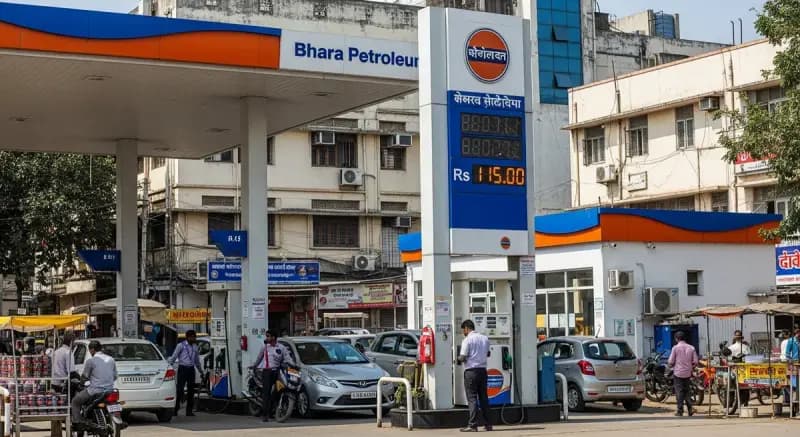
Petrol prices in India are often a subject of heated discussion among consumers, policymakers, and industry experts. With the ever-fluctuating global oil markets and economic conditions, determining whether petrol prices in India will ever come down is a complex question. As we take a closer look at the dynamics at play, it becomes clearer that several factors are involved in shaping petrol pricing in the country.
Historically, India's dependence on imported oil means that global oil market trends have a significant impact on domestic petrol prices. In addition to that, taxes and levies imposed by both the central and state governments contribute to the final cost consumers pay at the pump. As the nation progresses and seeks sustainable energy solutions, the question of whether petrol prices will drop remains pivotal.
Global Oil Market Dynamics
The global oil market is notoriously sensitive to geopolitical events, supply-demand imbalances, and economic policies of major oil-producing nations. OPEC, the Organisation of the Petroleum Exporting Countries, plays a crucial role in managing the supply dynamics, thereby influencing global oil prices. When member countries decide to cut or increase production, international oil prices can fluctuate significantly, impacting import-heavy nations like India.
The shale oil revolution in the United States, while providing some relief to the global dependence on OPEC, has introduced additional variables affecting prices. Technological advancements in extraction and production have made previously inaccessible reserves viable, somewhat stabilising the market. However, environmental policies and shifts towards renewable energy are now adding more layers to this complex web.
Government Policies and Taxation
Petrol prices in India are also heavily influenced by government policies and taxation. The basic price of petrol is supplemented by excise duties, VAT, and other levies, which collectively account for a significant portion of the final retail price. These taxes are sometimes adjusted to stabilise the market or generate revenue for the government, leading to fluctuations in prices even if global oil rates remain steady.
In recent years, the Indian government has periodically reduced excise duties to offer relief to consumers, especially during periods of sharp global price increases. However, state-level VAT can vary significantly, leading to different petrol prices across the country. Policymakers are continually balancing between revenue needs and public affordability, making it challenging to predict long-term trends.
Economic Factors and Inflation
Inflation and exchange rates play crucial roles in determining petrol prices in India. Since crude oil is priced in US dollars, fluctuations in the rupee-dollar exchange rate directly affect import costs. A weaker rupee means higher costs for imported oil, leading to increased petrol prices for Indian consumers.
Moreover, inflationary pressures can lead to increased production and transportation costs for oil companies, further affecting the end-user price. During high inflation periods, governments may find it difficult to adjust taxes or duties, leaving consumers to bear the brunt of increased oil costs. Economic stability, therefore, is a key factor in determining long-term petrol pricing in the country.
The Shift to Alternative Fuels
With the global push towards sustainable energy, there is a continuous effort to shift from fossil fuels to alternative, cleaner sources of energy. In India, the government has been promoting electric vehicles (EVs) and other renewable energy sources to reduce dependence on imported oil.
Increased adoption of EVs and government incentives for renewables could potentially ease the demand for petrol, possibly influencing market dynamics and resulting in lower prices. However, the transition is expected to be gradual, and its effect on petrol pricing will manifest over a long period, rather than immediately.
Future Outlook: Will Prices Come Down?
Predicting future petrol prices is inherently uncertain, given the myriad factors at play. However, some scenarios could lead to a reduction in prices. Global geopolitical stability or breakthroughs in energy technology that significantly reduce production costs can lead to lower prices.
On the domestic front, policy changes and infrastructural investments promoting alternative energies can gradually shift demand, reducing pressure on petrol prices. However, given the growth trajectory of the Indian economy and its rising energy demands, substantial price reductions in the short term remain uncertain.
Implications for Consumers
For everyday consumers, the impact of high petrol prices is felt deeply, contributing to the cost of commuting and goods. While long-term solutions are in motion, short-term relief often comes in the form of temporary government interventions such as tax cuts or subsidies.
Consumers can look towards more fuel-efficient vehicles, carpooling, and public transportation as immediate steps to mitigate the impact of high petrol prices while anticipating more structural solutions to take effect over time.
Closing Paragraph
In conclusion, while the prospect of petrol prices significantly falling in India is layered with complexities and dependent on several interrelated factors, ongoing discussions and policies are indicators of a path forward. Nxcar remains committed to delivering the latest insights and driving information to keep you informed on all automotive developments in India, helping you navigate through these complexities with more clarity.